What’s the Best Time of Day to Water Your Garden? Optimize Plant Health & Save Water
This post may contain affiliate links. If you purchase through them, I may earn a small commission at no extra cost to you. As an Amazon Associate, I earn from qualifying purchases.
Watering your garden at the right time of day can make a big difference in how healthy your plants grow. The best time to water your garden is in the early morning, between 5:00 and 9:00 am, when temperatures are cool and less water is lost to evaporation. Watering at this time also helps your plants dry off faster, which lowers the risk of fungal diseases and keeps them strong all season long. You can read more details on why morning is the ideal time in this guide to the best time to water your plants.
5 Quick-Start Garden Plans for Growing Fresh Food at Home (Free PDF)
Get beginner-friendly raised bed garden layout plans, simple container garden ideas, and a flexible salad garden plan you can put to work right away. Perfect for small spaces, patios, and first-season growers.
Instant email delivery • Unsubscribe anytime
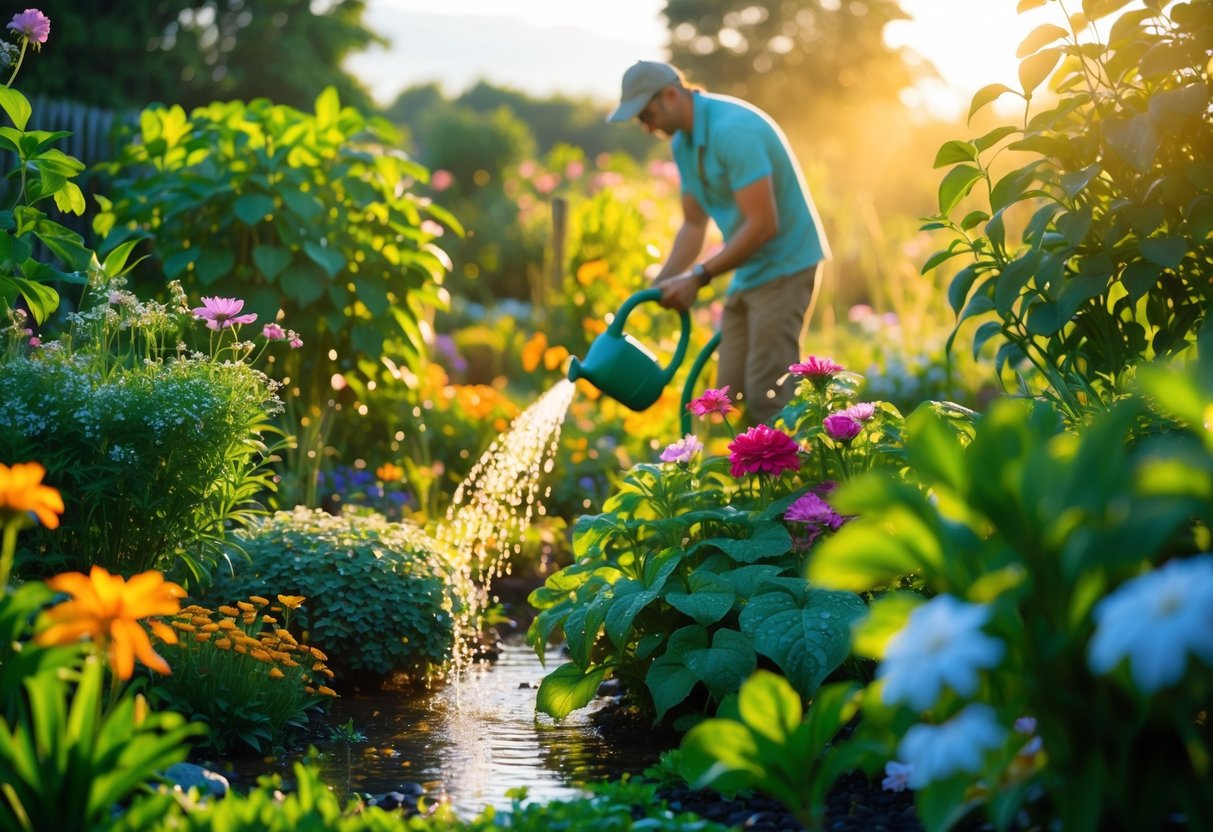
You might wonder if watering in the evening or late afternoon is a good idea. While these times can work if you use drip irrigation or a soaker hose, avoid wetting the leaves, because lingering moisture can increase plant diseases. Try to avoid watering during the hottest part of the day, since most of the water will just evaporate before it gets to the roots.
Key Takeaways
- Water in the early morning for best results
- Avoid midday and late evening when possible
- Adjust watering methods for your specific garden type
Why Watering Time Matters
The time you water your garden shapes how well plants use water and how healthy they stay. Watering at the right hour can help cut down on evaporation, fight off diseases, and keep roots strong.
Want to Grow Fresh Food at Home?
Grab the Beginner’s Guide to Thriving Gardens—your step-by-step plan to grow real food in any backyard, patio, or balcony. Perfect for first-time gardeners!
Buy the Ebook for $14Includes 7 free bonus guides • Instant download • Beginner-friendly
Impacts on Plant Health
When you water can affect your plants’ growth and resilience. Early watering gives plants time to take in moisture before the heat rises, helping them manage stress during the hottest parts of the day.
If you water late in the day, plants can sit in wet soil overnight, which might lead to root issues or slow growth. Morning watering supports natural plant cycles, helping leaves dry out quickly and encouraging proper nutrient uptake.
Consistent timing also keeps your plants on a schedule, making them stronger against sudden changes in weather conditions. Well-watered plants in the morning usually look greener and more perky throughout the day.
Water Loss from Evaporation
Water applied during hot or sunny hours can evaporate quickly, wasting much of what you give your plants. When you water early in the morning, temperatures are lower, and the sun is not as strong. This gives water more time to soak deeper into the soil.
Here is a simple comparison:
| Watering Time | Water Loss to Evaporation |
|---|---|
| Early Morning | Low |
| Afternoon | High |
| Evening | Moderate |
Watering late in the morning or midday often means much of the water never reaches the roots. For efficient use of water and healthier plants, aim to water between 5 a.m. and 9 a.m. as most experts recommend on Better Homes & Gardens and Start a Garden.
Influence on Disease Risk
Wet leaves overnight create a damp environment that encourages fungal problems like powdery mildew, blight, and leaf spot. If you water in the evening or at night, plants may stay wet for hours, making them more vulnerable to disease.
Morning watering cuts this risk by letting leaves and soil surface dry out during the day. This small change can help protect vegetables and flowers, which are often the most sensitive to fungal growth.
When water is directed at the soil instead of the leaves, and plants begin the day dry, you lower the chance of infection and reduce the need for fungicides. This keeps your garden cleaner and less prone to pest issues linked to overly wet conditions, as reinforced by Tiny Garden Habit.
Want to Grow Fresh Food at Home?
Grab the Beginner’s Guide to Thriving Gardens—your step-by-step plan to grow real food in any backyard, patio, or balcony. Perfect for first-time gardeners!
Buy the Ebook for $14Includes 7 free bonus guides • Instant download • Beginner-friendly
Morning Watering: The Optimal Time
Watering your garden in the early morning is the best practice for strong, healthy plants. Moisture reaches the roots when it is most needed, and your garden becomes more resilient to daytime heat and common plant diseases.
Benefits of Morning Irrigation
Early morning watering, usually between 5:00 and 9:00 a.m., is considered the optimal watering time for most gardens. At this time, temperatures are cooler, and the sun is not as intense. Less water is lost to evaporation, which increases efficiency.
You save water and help your plants absorb it more deeply. Morning moisture is delivered right when roots are actively taking up nutrients, which supports healthy growth. Plants use this water throughout the day for key processes like photosynthesis.
A good practice is to aim water at the base of plants, keeping leaves as dry as possible. This makes each drop count and keeps the soil moist for longer. If getting up early is tough, tools like drip irrigation or soaker hoses with timers greatly help maintain consistency.
Preparing Plants for Daytime Heat
When you water in the morning, your plants start their day fully hydrated. This preparation is vital as the sun rises and temperatures increase. Well-hydrated roots allow your plants to withstand heat without the risk of sudden wilting.
Moisture in the soil acts like a buffer, giving roots a supply of water while the heat causes surface moisture to evaporate. If you water later, much may be lost before roots can access it. Morning routines also give you time to spot early signs of stress or dehydration and act quickly.
Plants that receive proper hydration in the morning are better able to perform photosynthesis efficiently. This healthy start strengthens overall growth and yield, especially during dry or hot stretches when plants are under stress.
Reducing Disease and Fungal Risks
Watering in the morning greatly helps with disease prevention. When leaves get wet, early sun quickly dries them off. This reduces the risk of fungal problems, such as powdery mildew and leaf spot, which thrive in damp conditions.
Evening or night watering keeps leaves wet for longer, creating an environment where fungi and bacteria can spread. Morning watering limits this moist window, keeping plants healthier.
Keeping foliage dry also prevents water from sitting on leaves overnight. Healthy, dry leaves are much less likely to develop disease or spread pathogens to nearby plants. These steps help keep your garden strong and productive.
Evening Watering: When and How to Do It Safely
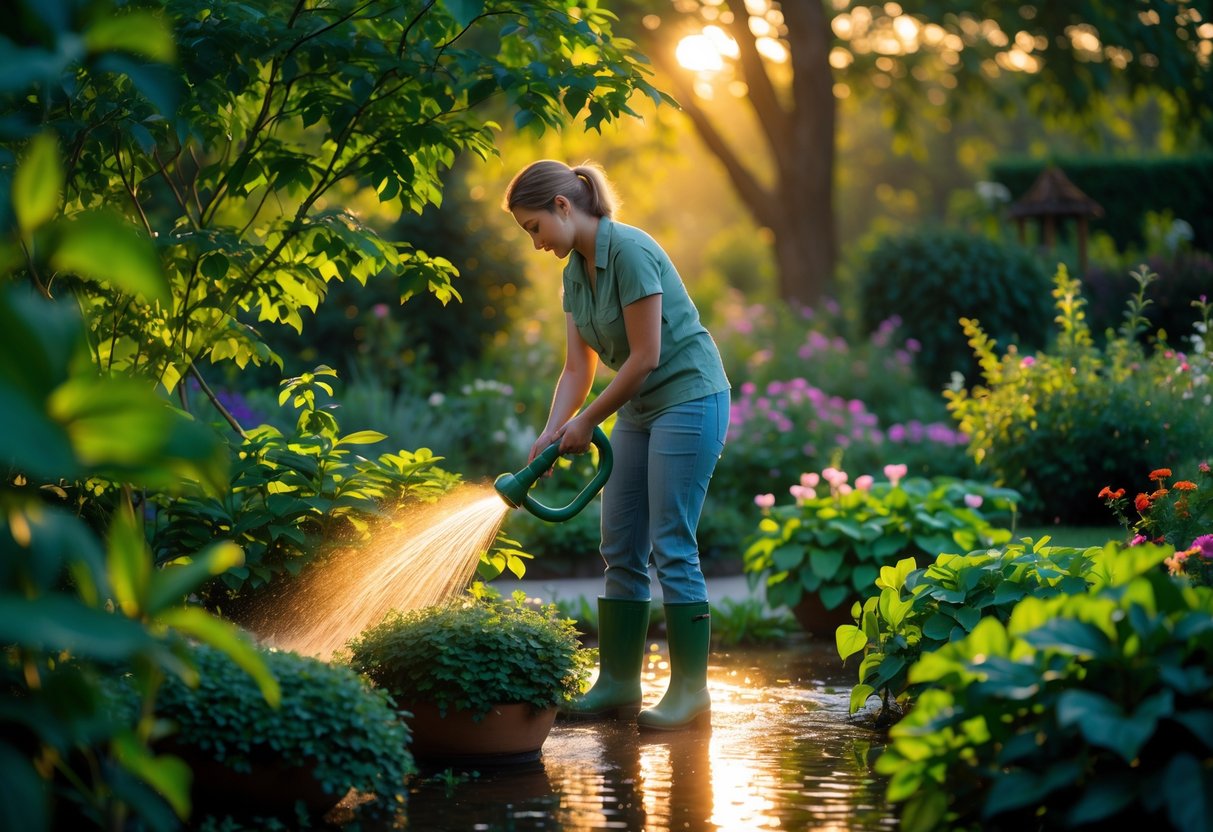
Evening watering can be part of your garden care routine, but you need to pay attention to a few important risks and benefits. Taking the right steps allows you to avoid problems with disease and still keep plants hydrated during hot or busy days.
Advantages of Evening Watering
Watering in the evening helps slow down evaporation since temperatures are cooler and the sun is not intense. This can give your plants more time to soak up water, especially during dry spells or heatwaves.
If you have a busy schedule in the morning, evening watering offers a convenient alternative for keeping up with your routine. Soil absorbs water more efficiently in lower light and lower heat, which helps reduce water waste.
Want to Grow Fresh Food at Home?
Grab the Beginner’s Guide to Thriving Gardens—your step-by-step plan to grow real food in any backyard, patio, or balcony. Perfect for first-time gardeners!
Buy the Ebook for $14Includes 7 free bonus guides • Instant download • Beginner-friendly
A well-timed evening watering can also lessen the stress on plants exposed to strong afternoon sun. As long as you do it safely, you can take advantage of lower winds and a calmer yard environment at the end of the day. Some sources agree that evening watering is safe when done properly.
Risks of Nighttime Moisture
Leaving moisture on plant leaves and stems overnight increases the risk of fungal diseases. Fungi like powdery mildew and leaf spot can grow quickly in damp, dark conditions. When water stays on foliage overnight, it cannot evaporate and creates the perfect breeding ground for pathogens.
Pests such as slugs and snails are more active in moist environments at night. Wet soil and leaves make it easier for them to move and feed. Dense plantings that block air flow can make these problems worse.
Using overhead watering in the evening compounds the risk by wetting more leaves and flowers. Early morning watering is less risky for disease, according to garden experts, but careful nighttime routines can help manage the dangers.
Best Practices for Evening Irrigation
To safely water in the evening, focus on watering at the base of plants instead of using sprinklers or hoses that spray leaves. This keeps the foliage dry and helps guard against fungus.
Use drip irrigation or soaker hoses to deliver water directly to the roots. Avoid watering too late; aim to finish a couple of hours before sunset so any splashes can dry before nightfall.
Water deeply but less often to encourage roots to grow down, which makes plants stronger and reduces disease risk. After watering, check that there is no standing water, as this can attract pests and cause root rot. Following these steps helps keep your evening watering routine healthy and effective.
Times to Avoid Watering
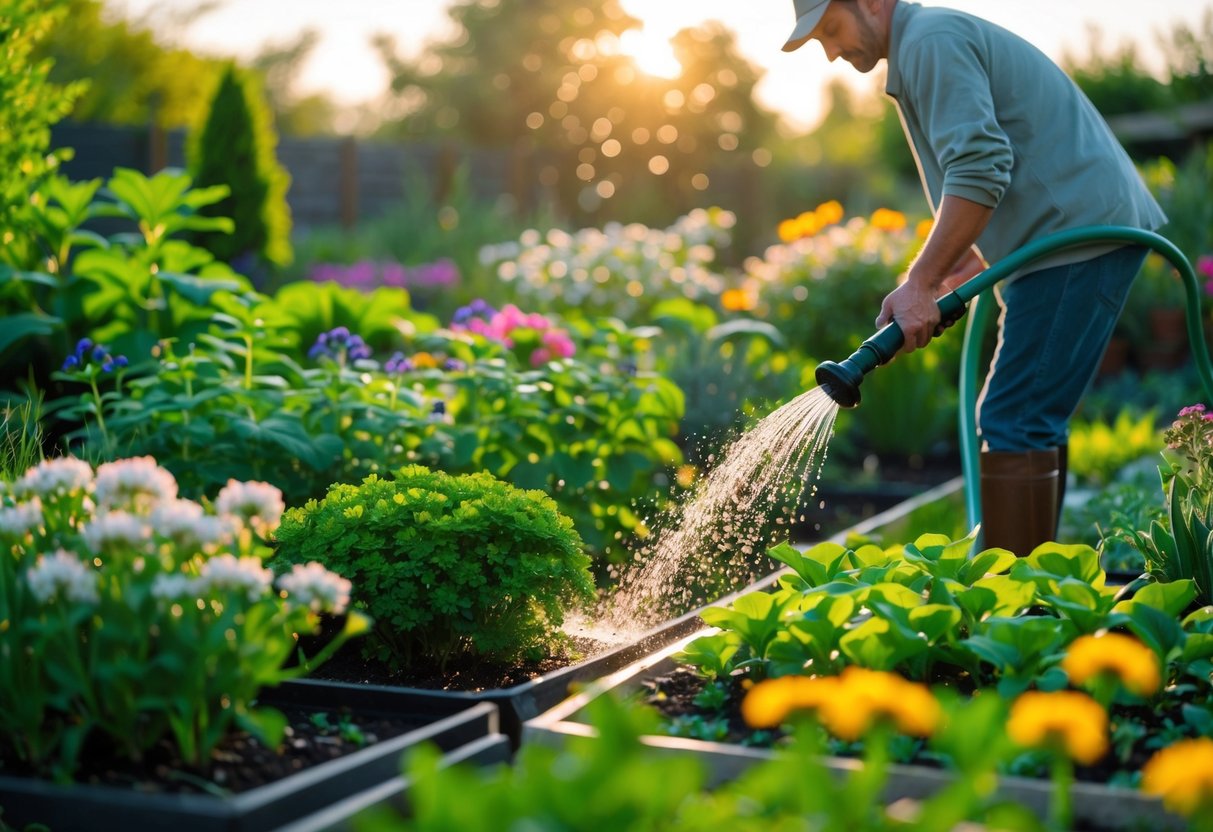
Watering plants at the wrong time can waste water, increase plant diseases, and limit root health. Picking the right time means your garden gets the water it needs while reducing problems like evaporation and root rot.
Midday and Afternoon Dangers
Midday and afternoon are poor choices for watering your garden. During these times, the sun is strong and temperatures are usually at their highest. Water from your hose or sprinkler quickly evaporates before it can soak into the soil and reach plant roots. As a result, less water is available for your plants, and you end up using more water than necessary.
High daytime temperatures can also cause stress to your plants. Water left on leaves during peak sun hours may not actually scorch the leaves, but it is still more likely to evaporate. This means your plants may not get enough moisture when they need it most. Studies and experts agree that watering in the heat of the day is inefficient and leads to greater water loss due to evaporation. For more details, see advice from Better Homes & Gardens.
Why Late Night Watering Can Harm Plants
Late night watering is risky because extended moisture on plant leaves and stems can encourage fungal diseases and root rot. At night, temperatures go down and there is little evaporation. Wet leaves that stay damp through the night are at higher risk of mildew, blight, and other garden diseases.
If water pools around roots, it can lead to root rot, especially in clay or poorly draining soil. Without sunlight to help dry leaves and soil, your plants may stay too wet for too long, weakening root systems over time. Plant health problems caused by nighttime watering can be hard to notice until damage is already done.
Experts recommend avoiding night watering when possible, especially for disease-prone plants. Learn more about the drawbacks of night and evening watering at The Old Farmer’s Almanac.
Factors That Influence the Best Watering Time
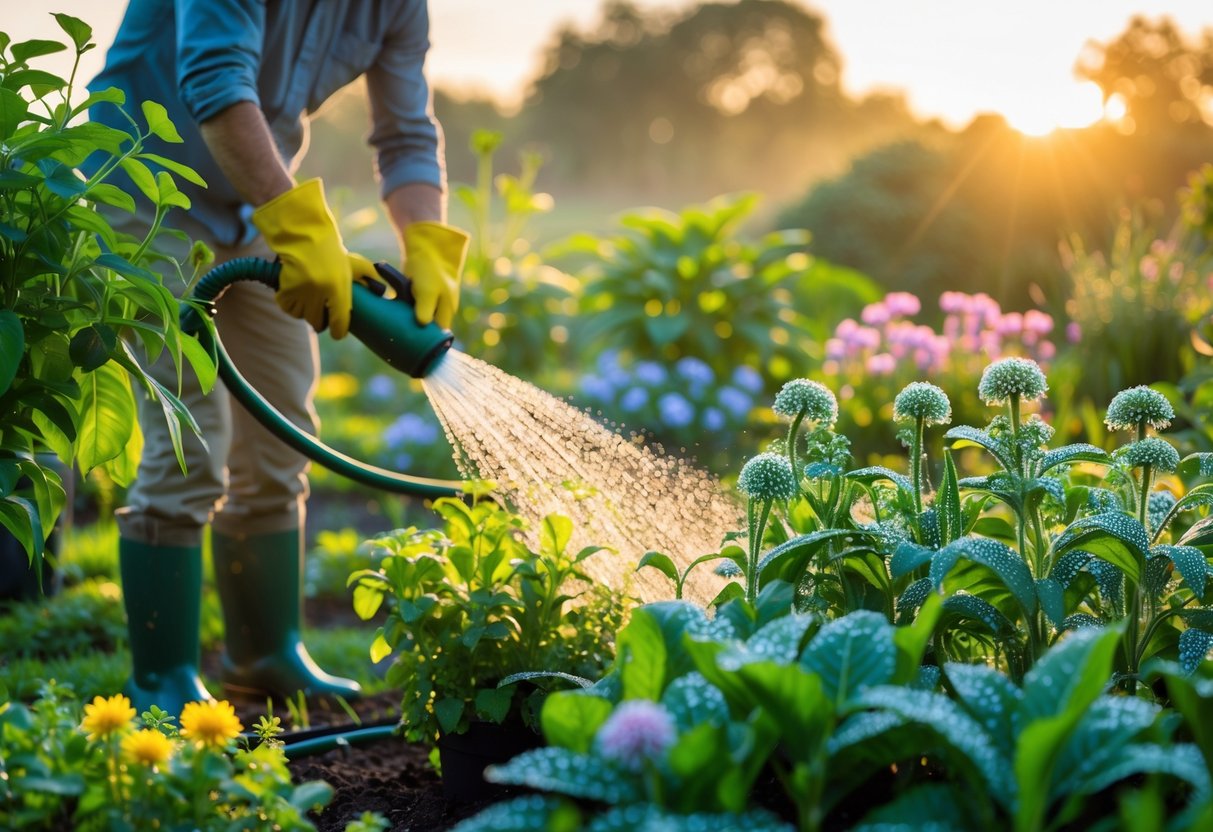
The best time to water your garden depends on several specific factors. These include your local climate, changing seasons, and how much rainfall your garden receives through the year.
Climate and Weather Conditions
Your local climate directly affects your watering needs. In hot, dry regions, water evaporates quickly, so early morning watering is ideal. Cooler climates give you more flexibility but watering in mid-morning is still best.
High humidity can keep soil moist longer, so you may need to water less often. Windy conditions speed up evaporation, which means you might have to adjust both the timing and frequency. Always monitor your garden for signs of dryness, like wilting or soil pulling away from plant roots.
Weather changes, such as heat waves or unexpected cold snaps, can force you to change your usual watering schedule. Tracking temperatures and local forecasts helps you plan better and stay ahead of sudden shifts.
Seasonal Considerations
As the seasons change, your garden’s water needs do too. In spring and summer, plants are actively growing and may require more frequent watering. In fall and winter, cooler temperatures and shorter days usually mean you can water less often.
Sunlight exposure matters as well. During long, sunny days, soil dries out quicker than on short, cloudy days. Adjust your watering frequency as daylight hours increase or decrease.
Mulching your garden beds in the warmer months can help retain moisture and reduce how often you need to water. A good rule is to check the soil moisture regularly, since plants can become stressed if you overwater or underwater.
Impact of Rainfall
Rainfall is a major factor in watering schedules. If your area receives steady rain, you might need to water very little. Installing a rain gauge helps you measure exactly how much water your garden gets from the weather.
Heavy rainfall can saturate soil, making extra watering unnecessary for several days. If rainfall is inconsistent, check soil moisture before watering to avoid shallow root development or root rot.
After a dry spell, don’t rush to overwater. Instead, let the soil absorb moisture gradually. Also, keep in mind that raised garden beds and containers often dry out faster than in-ground gardens, even during rainy periods, and may still need extra attention. Find more information about adjusting your schedule for rainfall at this detailed watering guide.
Soil Type and Moisture Retention
The water your plants receive is only as useful as the soil’s ability to absorb and hold it. Understanding how different soils behave and learning a few helpful techniques can prevent dry soil and roots from missing out on water.
Assessing Soil Moisture
Checking soil moisture is a basic but important gardening practice. Use your finger or a small tool to dig down 2-3 inches. If the soil feels cool and sticks together, it likely has enough moisture already.
Some gardeners use a soil moisture meter for quick and easy readings. This tool gives accurate information, especially for deep-rooted plants. Take readings in a few spots because water doesn’t always spread evenly.
Different plants need different levels of moisture. For example, vegetables and flowers often need consistently moist soil, but some shrubs prefer the ground to dry between waterings. Adjust how often you water based on what your soil moisture check shows. You can read more by visiting a guide on when to water plants based on moisture reading.
How Soil Type Affects Water Absorption
Soil type plays a big role in how much water your garden actually keeps. Sandy soils drain water quickly and dry out faster, making frequent watering necessary. These soils often need extra help retaining water, especially in hot weather.
Clay soils hold onto water for longer, sometimes making the surface look wet while the roots remain soggy or not getting enough oxygen. Overwatering in clay-rich gardens can lead to root problems and disease.
If you have loam—a balanced soil with sand, silt, and clay—you get the best of both worlds. Loam absorbs water well and holds it, but also drains out extra moisture. Knowing your soil type lets you plan watering and avoid waste. For more details, see how different soil types affect moisture retention.
Improving Moisture Retention with Amendments
You can boost your soil’s ability to hold water by mixing in organic matter. Compost, peat moss, and well-rotted manure help sandy soils absorb and hold more moisture, reducing the number of times you have to water.
For clay soils, adding organic matter like compost breaks up heavy clumps. This lets water move through more easily, so roots avoid standing water and get the oxygen they need.
Mulch can also help by holding water at the soil surface and reducing evaporation. Apply 2-3 inches of straw, shredded leaves, or bark to keep the soil cool and moist. The right amendments not only improve water retention but also keep your garden healthier. More tips can be found in guides on assessing and improving soil structure for watering.
Watering Techniques for Maximum Efficiency
Choosing the right watering method helps you save water, support strong roots, and keep your plants healthy. Each technique has benefits and works best in certain situations, so your equipment and schedule matter for efficiency.
Drip Irrigation and Soaker Hoses
A drip irrigation system delivers water right to plant roots using small tubes and emitters. This method provides even, slow moisture and limits evaporation, making it ideal for beds, vegetable gardens, and rows.
Soaker hoses are flexible tubes that release water along their length. They’re easy to set up and can snake through garden beds without disturbing plants. Both systems let you water early in the morning on a timer, further improving water efficiency and reducing waste.
With these systems, you greatly cut down on runoff and target water exactly where it’s needed most. They also help prevent leaf diseases since plant leaves remain dry. Setup costs can be higher at first, but you save time and water in the long run. Learn more about using drip irrigation and soaker hoses for maximum efficiency.
| Method | Water Efficiency | Setup Difficulty | Best Use |
|---|---|---|---|
| Drip Irrigation | Excellent | Moderate | Vegetable beds |
| Soaker Hose | Good | Easy | Borders & rows |
Watering Cans and Wands
For small gardens, pots, or delicate seedlings, watering cans give you full control. You can pour water slowly right at the base, avoiding splashes on leaves. Choose a can with a narrow spout for accuracy or a rose for gentle, wider coverage.
A watering wand attaches to a hose and lets you direct a soft stream of water under leaves and straight to soil level. Using a wand cuts down on waste by letting you reach tight spots and adjust flow as you move along your plants. Both tools fit well into container gardening and raised beds, giving you targeted moisture application, which supports better water conservation.
When using cans or wands, check the soil before watering so you don’t overwater. Water slowly and deeply.
Deep Watering Methods
Deep watering means soaking the soil so water reaches the deeper roots, not just the top few inches. This encourages roots to grow down, making your plants stronger and more drought-resistant.
To water deeply, apply moisture slowly. With a drip system, set it to run long enough for the water to penetrate at least 6 inches down. For hose or watering can use, water in stages, allowing each application to soak in before adding more.
You can check if you’ve watered deeply by pushing a finger or trowel into the soil—moisture should reach the root zone. Deep watering prevents shallow rooting, reduces surface evaporation, and can cut down your overall watering frequency. See more tips for deep watering and building efficient watering habits.
Tailoring Watering to Plant and Garden Type
Plants and garden types absorb water differently. Matching your watering habits to what you are growing helps improve plant growth and saves water.
Vegetable Gardens
Vegetable gardens do best with deep, even watering. Most vegetables need about 1 to 1.5 inches of water each week, split into two or three sessions. Don’t just water the soil surface—get water down to the root zone for stronger growth. Early morning is the best time to water, as this lets the leaves dry during the day and prevents disease.
Seedlings and new transplants will often need extra water to help them get established. You can check if your garden needs water by feeling the top 1-2 inches of soil. Mulching your beds helps keep moisture in the ground and limits weed growth. For more tips, see this veggie watering guide.
Quick Table: Vegetable Watering Tips
| Plant Stage | Water Needs | Notes |
|---|---|---|
| Seedlings/starts | Daily, light | Keep soil moist, not soggy |
| Established plants | 2-3x/week, deep | 1-1.5 in. per week total |
Lawns and Ornamental Plants
Lawns and ornamental plants have different needs than vegetables. Lawns prefer deep, infrequent watering that encourages roots to grow deep into the soil. Most lawns get by with about 1 inch of water weekly. The best time to water lawns is also early morning, to limit water lost to evaporation.
Ornamental plants, like shrubs and flowers, vary more. Many need less water than vegetables, especially if they’re native or drought tolerant. Use soaker hoses or drip irrigation where possible to deliver moisture right to the soil, which reduces disease and water waste. Avoid watering ornamental foliage late in the day to stop fungus from spreading.
Adjusting for Different Plant Water Needs
Different plant types have unique water needs based on climate, species, and where they grow. Drought-tolerant plants such as lavender or succulents need far less water compared to thirsty annuals or tropicals. Plants in pots dry out faster and usually need to be watered more often than those planted in the ground.
Keep an eye out for signs your plants are thirsty, like wilting or dry topsoil. Water plants at the base to keep leaves dry and lower risk of disease. Adjust your schedule based on recent rainfall, heat waves, and your specific plant type. For more on timing, read advice on watering plant types.
Signs of Insufficient or Excess Watering
Watering your garden the right way is key to plant health. Plants can show clear signs when they aren’t getting the right amount of water, and knowing these can help prevent problems before they become serious.
Identifying Water Stress
Water stress means your plants aren’t getting enough water. The first signs usually appear in the leaves. Look for wilting, leaf curl, or a dull, faded color. Leaves may turn brown or crispy at the edges.
In vegetables, fruit size may be smaller than normal, and flowering can slow down. Soil that dries out quickly or pulls away from the edge of planters is another sign you need to water more often. You might notice your plants drooping during the heat of the day and not recovering by evening.
If you want a quick check, try the finger test: push your finger into the soil about two inches deep. If it feels dry, it’s time to water. For more details on simple tests, read this practical watering guide.
Recognizing Overwatering Issues
Signs of overwatering are different but just as important. Leaves may turn yellow and look swollen or soft. Sometimes, the plant may wilt even though the soil is wet.
Roots can start to rot in soggy conditions. Root rot often gives off an unpleasant smell and can cause the plant’s base to become mushy or dark. Overwatered plants may also grow mold or fungus on the soil surface.
Check the soil before watering—if it feels damp two inches down, hold off to avoid adding stress. Overwatering is a common mistake, and it’s easier to prevent if you watch for these warning signs. A good routine is to water deeply but less often and monitor soil moisture with a rain gauge or your finger. This will help protect against overwatering and root rot.
Watering Tips for Healthy Plants
Applying the right watering techniques and habits helps plants grow strong and reduces the risk of pests, disease, and wasted water. Using proper materials and a set routine helps soil hold water and gives your garden plants the best chance at thriving.
Mulching for Moisture Retention
Mulching is a simple way to help soil stay damp longer. When you use organic mulch like shredded bark, straw, or leaves, it acts like a protective blanket for the soil. This helps keep the sun off the dirt and slows down evaporation.
A 2-inch layer of mulch keeps soil moist, meaning you do not need to water as often. Besides holding moisture, mulch stops weeds from growing, which can compete with your plants for water and nutrients.
Over time, organic mulch breaks down and enriches your garden with nutrients that improve soil health. Try to keep mulch a few inches away from stems and plant bases to prevent rot and let air flow. For more details about the best mulching practices, visit this helpful guide on when to water your garden and the benefits of mulch.
Scheduling and Consistency
A steady watering schedule helps plants develop deeper roots and builds overall resilience to heat and drought. Mornings are usually the best time to water because cooler temperatures mean less evaporation and more water reaches the roots.
During hot, dry stretches, check the soil daily by sticking your finger about 2 inches down. If it feels dry, it is time to water. Most vegetable gardens need about 1 inch of water a week—use a rain gauge to measure if you are meeting this amount.
For containers, you might need to water every day or sometimes twice a day in heat. Consistency is important; avoid letting soil dry out completely between waterings. For help with watering frequency and best timing, you can use this watering chart and tips.
Avoiding Disease Through Technique
How you water plants can affect their health just as much as when you water. Always water the base of each plant; getting leaves wet can lead to fungal or bacterial diseases, especially if they stay damp overnight. Use a watering can or drip irrigation aimed at the soil, not the leaves.
Try not to water with sprinklers that soak the whole plant, as this wastes water and increases disease risk. Deep, slow watering encourages roots to grow down and make the plant stronger.
If you must water in the evening, give leaves time to dry before nightfall. Prioritize keeping leaves, flowers, and stems as dry as possible to cut down on common plant diseases. Learn more about disease prevention with expert watering techniques.
Frequently Asked Questions
The right water schedule helps your plants stay healthy and avoid stress. Small changes in timing can affect growth, disease risk, and how well soil holds moisture.
How often should outdoor plants be watered for optimal growth?
Most outdoor plants need about one inch of water per week. During very hot or dry weather, you may need to water two or three times a week. Check soil moisture with your finger—if the top two inches are dry, it’s time to add water.
What factors determine the ideal watering schedule for garden plants?
Plant type, soil texture, and sunlight all affect how often you need to water. Sandy soil dries out faster than clay soil. Plants in full sun usually need more water than those in shade. Look up care guides for your specific plants to create a schedule that fits their needs.
Should garden watering be adjusted based on weather conditions?
Yes, always adjust your watering during rain or heat waves. After a heavy rain, you can skip watering for a few days. In extreme heat or drought, water more often and check soil frequently. Drip irrigation or soaker hoses help keep soil wet longer in dry climates, as experts note at Epic Gardening.
Is morning considered a better time than evening to water lawns?
Yes, morning is the best time to water your lawn. Early watering lets moisture reach roots before the sun can evaporate it. This keeps grass healthy and helps prevent fungal diseases, as seen in this guide and Epic Gardening.
Can watering plants at night cause any issues for plant health?
Watering at night can leave leaves and soil damp for too long. This increases the chance of fungal diseases and root rot. It’s better to water early so leaves dry quickly, reducing disease risk according to research from Yard and Garden.
What are the benefits of watering indoor plants during specific times of the day?
Watering indoor plants in the early morning or midday helps the soil dry out gradually. This prevents water from sitting at the roots overnight and lowers the chance of mold or root rot. Plants also use water better when exposed to daylight after watering.
Want to Grow Fresh Food at Home?
Grab the Beginner’s Guide to Thriving Gardens—your step-by-step plan to grow real food in any backyard, patio, or balcony. Perfect for first-time gardeners!
Buy the Ebook for $14Includes 7 free bonus guides • Instant download • Beginner-friendly


