Using Eggshells in Garden: Practical Benefits and Methods
This post may contain affiliate links. If you purchase through them, I may earn a small commission at no extra cost to you. As an Amazon Associate, I earn from qualifying purchases.
Have you ever wondered what to do with leftover eggshells from breakfast? You can use eggshells in your garden to add valuable calcium to the soil, help protect your plants from certain pests, and support healthier plant growth. Many home gardeners overlook eggshells, but they are an easy and natural way to recycle kitchen waste while improving your garden.
5 Quick-Start Garden Plans for Growing Fresh Food at Home (Free PDF)
Get beginner-friendly raised bed garden layout plans, simple container garden ideas, and a flexible salad garden plan you can put to work right away. Perfect for small spaces, patios, and first-season growers.
Instant email delivery • Unsubscribe anytime
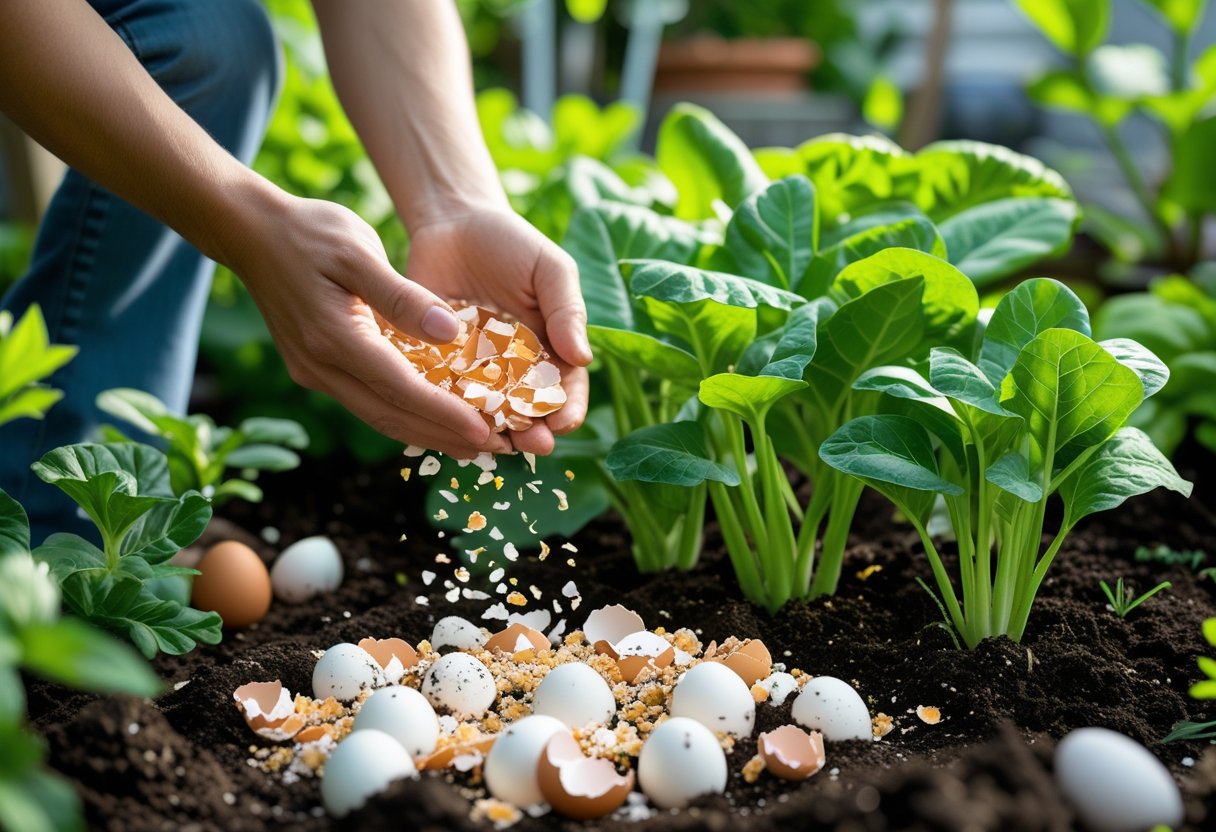
Whether you garden in pots, raised beds, or open ground, adding crushed eggshells can provide a steady boost of nutrients and make your soil more welcoming for new plants. You can even use eggshells in compost or as a simple mulch. Learn practical methods to prepare and use eggshells and get tips on when and where they work best in your garden.
Key Takeaways
- Eggshells add important nutrients and support healthy soil.
- Simple preparation and application methods make eggshells easy to use.
- Using eggshells offers natural pest control and eco-friendly benefits.
How Eggshells Benefit Garden Soil
Eggshells are a common kitchen scrap, but they can serve as a useful amendment for your garden soil. They add essential nutrients, help manage soil pH, and may improve the physical condition of the soil.
Want to Grow Fresh Food at Home?
Grab the Beginner’s Guide to Thriving Gardens—your step-by-step plan to grow real food in any backyard, patio, or balcony. Perfect for first-time gardeners!
Buy the Ebook for $14Includes 7 free bonus guides • Instant download • Beginner-friendly
Calcium Carbonate’s Role in Soil Health
Eggshells are mainly made of calcium carbonate, which is the same material found in limestone. When you add crushed eggshells to your soil, you are supplying a slow-release form of calcium that is important for plants. Calcium is needed so plants can build strong cell walls.
If your soil lacks calcium, you may notice issues like stunted growth, leaf tip burn, and problems such as blossom end rot in tomatoes and peppers. By adding eggshells, you can help avoid these problems by keeping calcium levels steady.
The calcium in eggshells breaks down slowly, so it provides a long-lasting source rather than a quick burst. This steady release helps plants throughout the growing season.
Improving Soil Structure and Drainage
Crushed eggshells can make the texture of soil better. When you mix them into garden beds, they create small air pockets that increase aeration.
Better aeration allows plant roots to “breathe” and take up water and nutrients more easily. It also makes the ground less compact. Loose soil helps roots spread, which supports healthier plants.
Eggshells take time to break down, so their effect on soil structure is gradual. For best results, crush eggshells to a fine powder before adding them to your soil. This makes them decompose faster and boosts their benefit for your garden’s soil structure and drainage. Explore more at this guide on how to use eggshells in a garden.
Addressing Soil Acidity
Eggshells can help manage soil acidity because calcium carbonate is a natural liming agent. If your garden soil is too acidic, adding crushed eggshells can raise the soil pH slowly over time.
This helps create a better environment for many vegetables and flowers, which prefer neutral or slightly acidic soil. Unlike fast-acting lime, eggshells act gently and won’t cause rapid changes.
If you garden in an area with acidic rain or you use fertilizers that lower pH, using eggshells is a natural way to keep soil acidity balanced. Regularly adding finely crushed eggshells can maintain a more stable pH, which is important for nutrient availability and root health. Learn more about why eggshells are good for plants.
Want to Grow Fresh Food at Home?
Grab the Beginner’s Guide to Thriving Gardens—your step-by-step plan to grow real food in any backyard, patio, or balcony. Perfect for first-time gardeners!
Buy the Ebook for $14Includes 7 free bonus guides • Instant download • Beginner-friendly
Essential Nutrients Provided by Eggshells
Eggshells make an effective natural fertilizer because they contain nutrients that benefit your plants. Most of their value comes from a steady supply of calcium, plus a few important trace minerals.
Slow-Release Calcium
Eggshells are made of about 94% to 97% calcium carbonate. When you crush eggshells and mix them into the soil, they gradually break down, releasing calcium over time. This slow-release action helps prevent spikes or sudden drops in calcium, keeping levels stable for your plants.
Calcium is needed for strong cell walls, proper root development, and fruit quality. Tomatoes, peppers, and eggplants often suffer from blossom end rot, a problem linked to calcium shortage. By working crushed eggshells into your planting beds or even adding them to planting holes, you supply a continuous source of calcium where roots can reach it.
Eggshell fertilizer works best if shells are crushed finely. Breaking them into smaller pieces increases the surface area, letting bacteria and moisture break down the shells faster. Use eggshells as part of your regular soil amendment routine for steady, long-term improvement.
Additional Minerals Supplied
In addition to calcium, eggshells supply trace minerals such as magnesium, phosphorus, and potassium. Although these amounts are low compared to dedicated fertilizers, each helps your soil become more balanced for plant health.
- Magnesium supports chlorophyll production and enzyme activity.
- Phosphorus encourages root growth and flower development.
- Potassium aids water movement and helps plants withstand stress.
By choosing eggshells as part of a natural fertilizer plan, you provide your plants with essential nutrients while reducing kitchen waste. For more information about how eggshells benefit soil and which plants see the most improvement, see this detailed guide on eggshell fertilizer.
Methods for Preparing Eggshells for Garden Use
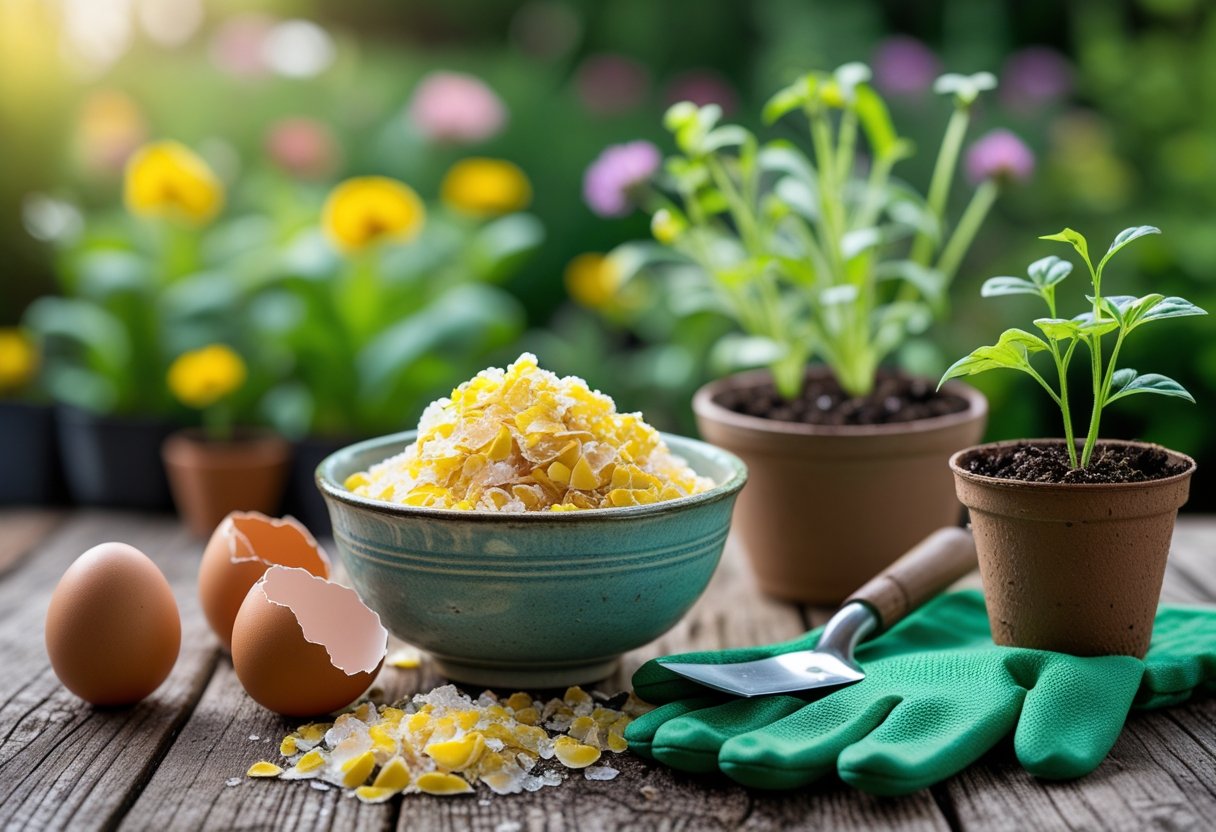
Preparing eggshells for your garden helps make calcium and other minerals available to your plants. Clean and crush the shells properly to reduce risks and boost their benefits.
Cleaning and Sterilizing Techniques
You should always rinse eggshells under cool water right after use to remove any egg white or yolk left on the shell. Let them dry in an open container for a day or two, or speed up the process by spreading them on a baking tray in the oven at 200°F for 30 minutes. Baking not only dries but also sterilizes the shells, killing bacteria like salmonella.
If you have a microwave, you can heat the shells for about 3 minutes as another option for sterilization. Both methods make the shells brittle and easier to crush. Make sure the shells are fully cooled before handling. This step is important for safe use in your garden and to keep your soil healthy. For more details, see how to properly clean and sterilize eggshells.
Best Ways to Crush Eggshells
After cleaning and drying, you need to crush the shells so the nutrients become available to your plants. There are a few good ways to do this:
- Place eggshells in a plastic bag and crush them with a rolling pin.
- Use a food processor or coffee grinder for a finer texture.
- Grind by hand with a mortar and pestle if you only have a small batch.
Finely crushed eggshells break down faster in soil, giving plants much-needed calcium sooner. For potted plants, use larger pieces at the bottom for drainage. For garden beds, mix crushed shells into the soil or sprinkle them around the base of plants to deter slugs and provide slow-release nutrients. Visit this guide for more tips on using crushed eggshells effectively.
Applying Eggshells Directly to Plants
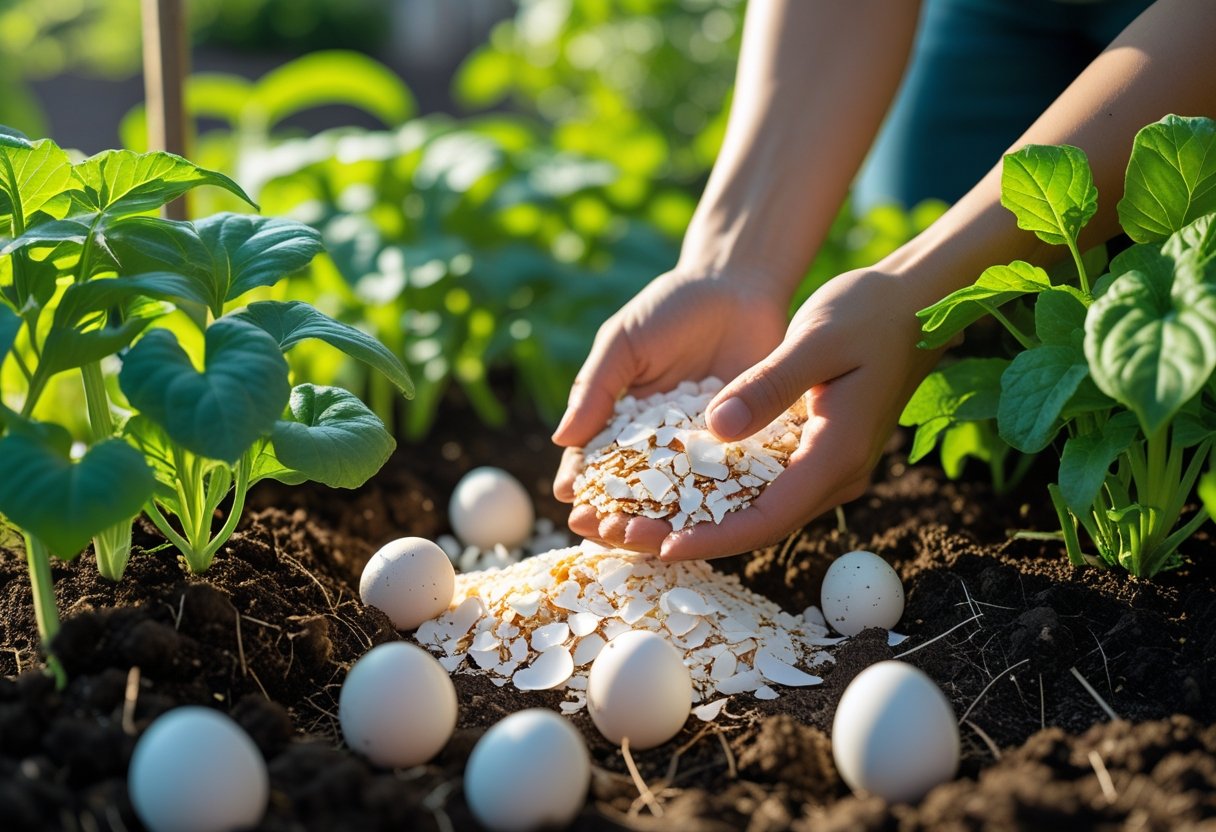
You can use eggshells around your plants by placing them on the surface or by mixing them into the garden soil. Each method helps add calcium, improve soil health, and may even offer mild pest control.
Surface Application Strategies
To use eggshells on the soil’s surface, rinse and dry the shells first to remove any residue. Crush them into small pieces or a coarse powder for easier breakdown. Sprinkle the crushed eggshells evenly around the base of your plants, creating a thin layer.
Want to Grow Fresh Food at Home?
Grab the Beginner’s Guide to Thriving Gardens—your step-by-step plan to grow real food in any backyard, patio, or balcony. Perfect for first-time gardeners!
Buy the Ebook for $14Includes 7 free bonus guides • Instant download • Beginner-friendly
This surface layer slowly releases calcium as the eggshells break down. Calcium is important for strong plant cell walls and helps prevent issues like blossom end rot in tomatoes and peppers. The sharp pieces also act as a simple, natural barrier that can discourage soft-bodied pests such as slugs and snails.
Avoid piling eggshells too thickly, as this can block water from reaching the soil. For best results, check the coverage after rain or watering and add more if needed. You can see more about how eggshells support pest control and soil health at Great Garden Plans.
Mixing with Garden Soil
Mixing eggshells into the soil helps nutrients go right where plant roots can reach them. Start by collecting and drying eggshells, then crush them into a fine powder or small fragments. Before planting, blend about 1 cup of crushed eggshells per square foot into the top few inches of garden soil.
This method not only boosts calcium levels, but also improves the soil’s texture. Eggshells help with aeration and drainage, which is essential for healthy root development. Over time, they break down and feed beneficial soil organisms.
You can add eggshells during planting or between crop cycles. Both new and established vegetable and flower gardens benefit from this approach. Mixing eggshells with other compost materials can further improve soil quality, as explained at The Gardening Channel.
Using Eggshells in Composting
Eggshells are a simple addition to your compost pile that provide useful minerals and help balance your compost. They can be prepared at home and easily mixed with other kitchen scraps to support healthy soil.
Benefits of Eggshells in Compost
Eggshells are made up of about 95% calcium carbonate. When you add them to your compost, they work as a slow-release source of calcium for your soil. Calcium is important for plant cell growth and helps prevent common issues like blossom end rot in tomatoes and peppers.
Including eggshells can lower the acidity of your compost since they create a more neutral pH. This is especially helpful if you compost a lot of fruit peels or coffee grounds, which can make compost more acidic.
Fine, crushed eggshells break down faster and release nutrients sooner. However, even larger pieces provide long-term benefits, as they will continue to supply calcium across several seasons. Eggshells also help improve soil texture as they break down over time, creating a better environment for plant roots. Learn more about the advantages at Gardening Know How’s page on using eggshells in the garden and in compost.
Steps for Adding to Compost Pile
Collect eggshells from used eggs and rinse them with water to remove any egg white or yolk. This helps keep pests away and lowers the risk of spreading bacteria.
Let eggshells dry by leaving them out in an open bowl or jar for a day or two. Dry eggshells are easier to crush.
Crush the eggshells using a rolling pin, your hands, or a food processor. Smaller pieces break down quicker and blend well into compost.
Add crushed eggshells to your compost pile along with fruit, vegetable scraps, coffee grounds, and yard waste. Stir the pile often to make sure eggshells mix evenly and break down with other materials.
If you use a worm bin, you can add finely crushed eggshells there too. The worms will use the grit to help with digestion and the extra calcium supports healthy worm populations. For more practical tips, see the Illinois Extension’s guide on using eggshells in the garden and compost.
Eggshells as Fertilizer for Specific Plants
Eggshell fertilizer is a valuable addition to your garden, especially for plants that need extra calcium. This can help strengthen plant growth and prevent some common problems caused by calcium deficiency.
Tomatoes
Tomatoes need plenty of calcium to stay healthy. Without enough calcium, tomatoes can develop blossom end rot, which causes dark, sunken spots on the fruit. Adding crushed eggshells to your garden soil gives tomatoes a natural source of calcium carbonate.
To use eggshell fertilizer, wash and dry eggshells, then grind them into a fine powder. Sprinkle the powder at the base of each tomato plant or work it into the soil. For better absorption, mix the powder into the top 2 inches of soil.
A helpful schedule is to add eggshells once at planting and again during flowering. This keeps calcium available when tomatoes need it most. Crushed eggshells also slightly lower soil acidity and support soil structure. Using eggshells is an eco-friendly way to supplement tomatoes without chemical fertilizers.
Peppers
Peppers benefit from calcium in a similar way as tomatoes. Calcium supports strong cell walls, improves disease resistance, and makes plants more resilient. If your peppers show weak growth, curled leaves, or small fruit, it may be a sign of calcium shortage.
To use eggshells with peppers, follow the same steps: clean the shells, grind them, then sprinkle around the base of each plant. Work the powder into the soil for faster release. This method can help prevent blossom end rot in peppers, which appears as black spots on the bottoms of fruits.
Tip: For best results, combine eggshell fertilizer with regular watering. Water helps dissolve the eggshell powder for quicker nutrient uptake. Eggshells are a simple, natural way to help your peppers produce healthy, strong fruits.
Pest Control with Eggshells
Crushed eggshells can help limit damage caused by garden pests. Their rough texture acts as a barrier for some insects while also deterring others when placed around plants.
Physical Barriers for Slugs and Snails
Slugs and snails dislike crawling over sharp surfaces. When you scatter crushed eggshells in a ring around plants, it creates a physical barrier. The jagged edges of dried, crushed shells are uncomfortable for these pests and may stop them from reaching your vegetables and flowers.
To use this method, collect, rinse, and dry eggshells. Crush them into small shards, not a fine powder. Sprinkle a wide, even circle around the base of each plant you want to protect. Check after rainfall or watering, since the barrier is only effective as long as it stays dry and sharp. This works best for low-growing crops like lettuce and strawberries.
Crushed eggshells are not harmful to pets, and they will eventually break down and add minerals to the soil. While this won’t get rid of all slugs and snails, it’s a simple and chemical-free strategy many gardeners use for organic pest control.
Other Garden Pests Affected
Some other soft-bodied garden pests, like certain caterpillars and cutworms, may also avoid eggshell barriers. The edges can scratch and irritate their bodies, making it less likely they will cross into protected areas.
For pests like beetles, you can try crushing eggshells into a finer powder and lightly dusting it directly on the bugs. The powder can get under their exoskeletons and may cause dehydration or irritation, acting much like diatomaceous earth. However, avoid dusting over your whole garden, as beneficial insects might also be harmed.
Eggshells are less effective against flying insects or larger pests. They do not deter ants or rodents. For a list of which pests are most affected, see practical tips from garden experts. Use eggshell barriers with other methods for the best results in your pest control plan.
Eggshells as Sustainable Gardening Solution
Eggshells play a key role in sustainable gardening by helping you cut down on waste and avoid harsh chemicals. Their natural benefits let you support your plants and the environment at the same time.
Reducing Kitchen Waste
When you use eggshells in your garden, you turn food scraps into a helpful resource instead of sending them to the landfill. This simple practice reduces the amount of kitchen waste you produce each week.
Eggshells are made of calcium carbonate, which helps enrich the soil. Instead of throwing shells away, you can rinse, dry, and crush them. Sprinkle crushed shells directly in the garden or add them to compost.
This keeps waste out of trash bins and gives nutrients back to the earth. It’s a practical step for anyone who wants to waste less and grow more. Using kitchen scraps like eggshells is an easy way to practice sustainable gardening.
Eco-Friendly Gardening Practices
Eggshells offer a natural alternative to chemical fertilizers and pest control products. Sprinkling crushed shells around your plants can deter some pests, like slugs, due to their sharp edges.
They also release nutrients slowly into the soil as they break down, which benefits root health over time. Unlike synthetic options, eggshells do not harm beneficial insects or pollute local water sources.
By making use of eggshells, you help build a sustainable, eco-friendly garden that is safer for wildlife and kids. With no extra cost and minimal effort, you can take a simple step toward healthier gardening.
Eggshell Mulch Applications
Eggshells can be used as an organic mulch to protect soil, conserve moisture, and add minerals. This application is simple, cost-effective, and makes the most of food waste from your kitchen.
Benefits of Eggshell Mulch
Eggshell mulch provides a layer that helps keep the soil moist and reduces evaporation, especially in hot weather. This is useful for keeping your plants hydrated between waterings. The shells also slowly break down and release calcium, which is important for strong stems and fruit development.
Using eggshells as mulch can help control weeds by blocking sunlight, which makes it harder for weed seeds to sprout. The jagged edges of crushed shells serve as a gentle barrier against soft-bodied pests like slugs and snails, which may avoid crossing the rough surface.
Eggshells are lightweight and won’t become compacted, so water and air can still pass through. Since they are biodegradable, you will not have to clean them up; they will break down naturally over time, improving your soil’s structure. For more information about using crushed eggshells in gardens, you may find this guide to eggshell uses in the garden helpful.
How to Apply Eggshell Mulch
Start by rinsing your eggshells to remove any egg residue. Let them dry out completely to prevent smells or attracting pests. Crush the eggshells by hand or with a rolling pin until you have small pieces about the size of coarse sand.
Spread a layer about 1/4 inch thick around the base of your plants, fruit trees, or shrubs. Focus on areas that need extra moisture retention or where pests have been a problem. Avoid making a thick mound right against plant stems; leave a small gap to keep air flowing and avoid rot.
Reapply eggshell mulch every few weeks or after heavy rain, as the pieces can wash away or become mixed into the soil over time. You can combine eggshells with other organic mulch materials such as shredded leaves or wood chips for added benefits. For step-by-step details, learn more about crushed eggshell mulch for gardens.
Common Mistakes and Best Practices
Using eggshells in your garden can add calcium and improve soil structure, but mistakes can limit their benefits or even harm your plants. It is important to match how you use eggshells to the needs of your garden soil and plants.
Avoiding Overuse of Calcium
It’s easy to think that more eggshells always help your plants, but too much calcium can throw off the balance of your garden soil. Most soil only needs a moderate amount of calcium. Adding too many eggshells can make the soil too alkaline, which is a problem for acid-loving plants like blueberries, azaleas, and peppers.
Eggshells raise the pH of your soil as they break down. This is helpful if your soil is acidic, but it’s harmful in neutral or alkaline soils. Too much calcium may also prevent your plants from getting other important nutrients.
Tips to avoid issues:
- Test your soil before adding eggshells.
- Learn which of your plants prefer acidic or alkaline conditions.
- Avoid using eggshells around plants that need acidic soil.
You can find more about soil pH impacts and calcium on Epic Gardening’s eggshell guide.
Tips for Effective Application
Eggshells work best when they are clean, dry, and crushed into small pieces. Washing removes any egg residue that could attract pests or cause disease. Drying makes them easier to crush and helps them break down faster once added to the garden.
Crushed or powdered eggshells mix into the soil better than whole or large pieces. Large pieces break down very slowly and won’t help your plants in the near term. For pest control, use coarser bits to deter slugs and snails from reaching your plants.
For best results:
- Wash and dry eggshells to remove bacteria.
- Crush them into fine pieces before using as fertilizer.
- Use larger bits for pest control barriers.
- Mix eggshells into the topsoil to help with soil aeration and drainage.
These best practices are explained further in this complete eggshell guide.
Frequently Asked Questions
Eggshells add calcium to soil, but not all plants benefit from these amendments. Their effect changes based on how you prepare them and which plants you choose. Eggshells can also help with pest control under certain conditions.
What are the benefits of using eggshells in garden soil?
Eggshells are made mostly of calcium carbonate. Adding them to soil can raise calcium levels, which some plants need for strong growth and to prevent problems like blossom end rot.
Finely ground eggshells mix into soil better and release nutrients faster. Using coarsely crushed eggshells provides less benefit because they break down very slowly.
How do eggshells affect the growth of flowering plants?
Flowering plants like tomatoes, peppers, hydrangeas, and roses may enjoy extra calcium from eggshells, especially if your soil lacks it. Calcium supports cell wall strength, helping blossoms and fruit to grow better.
Plants that don’t need extra calcium might not show much difference when you use eggshells. Most potted houseplants get enough nutrients from standard potting mix.
Are there specific plants that should avoid eggshell amendments?
Do not use eggshells around plants that prefer acidic soil. Blueberries, strawberries, and cabbage can suffer if the soil gets too alkaline because eggshells may raise soil pH.
If you use too many eggshells in the soil, you could disrupt the environment that sensitive plants need. Learn more about which plants benefit in this expert guide on using eggshells for plants.
What is the proper way to prepare eggshells for garden use?
Wash eggshells well to remove any residue. Dry them out, then grind them into a fine powder using a coffee grinder or food processor. This makes the calcium more available for plant roots.
Crushing eggshells by hand leaves them in big pieces, which decompose very slowly and do not provide quick benefits to your garden soil.
Can eggshells be used as a natural remedy for slugs in gardens?
Crushed eggshells are often suggested as a way to keep slugs away. The sharp edges can make it uncomfortable for slugs to cross.
However, studies and experience show the effect is usually minor or temporary. Wet weather and time can quickly break down the shells, so do not rely on this method alone to prevent slug damage.
How do coffee grounds and eggshells together benefit plants?
Combining coffee grounds and eggshells in compost helps create a more balanced nutrient mix. Coffee grounds add organic matter and some nitrogen, while eggshells provide calcium.
Mixing both into compost improves soil structure and nutrition for many types of garden plants. Using them together is one way to recycle kitchen waste for your garden’s benefit.
Want to Grow Fresh Food at Home?
Grab the Beginner’s Guide to Thriving Gardens—your step-by-step plan to grow real food in any backyard, patio, or balcony. Perfect for first-time gardeners!
Buy the Ebook for $14Includes 7 free bonus guides • Instant download • Beginner-friendly


