Organic Pest Control Tools That Get Results for Healthier, Greener Gardens
This post may contain affiliate links. If you purchase through them, I may earn a small commission at no extra cost to you. As an Amazon Associate, I earn from qualifying purchases.
Keeping pests away from our homes and gardens is an ongoing challenge. Many people want to control bugs, rodents, and plant diseases without harsh chemicals. That’s where organic pest control tools come in. These tools promise to manage pests with natural or non-toxic methods, making them a popular choice for anyone who cares about safety around children, pets, and the environment.
5 Quick-Start Garden Plans for Growing Fresh Food at Home (Free PDF)
Get beginner-friendly raised bed garden layout plans, simple container garden ideas, and a flexible salad garden plan you can put to work right away. Perfect for small spaces, patios, and first-season growers.
Instant email delivery • Unsubscribe anytime
Organic pest control includes traps, sprays, barriers, and repellents that use plant-based ingredients or physical methods. There are plenty of options, from sticky traps for insects to neem oil sprays and copper tape for slugs. When looking for the best tool, it’s important to consider what kind of pests you need to manage and whether you prefer a hands-on approach or a low-maintenance solution.
The most critical thing to keep in mind when choosing organic pest control is effectiveness against your specific pest problem. Look for tools that are easy to use and made of safe materials. Some products are designed for indoor use, while others hold up better outdoors. We spent hours researching popular organic pest control tools to find the options that actually work for common home and garden pests.
Want to Grow Fresh Food at Home?
Grab the Beginner’s Guide to Thriving Gardens—your step-by-step plan to grow real food in any backyard, patio, or balcony. Perfect for first-time gardeners!
Buy the Ebook for $14Includes 7 free bonus guides • Instant download • Beginner-friendly
Best Organic Pest Control Tools
We know it can be hard to deal with pests in a safe and natural way. Our list highlights the top organic pest control tools that really work. Let’s look at the best options for keeping your home and garden protected.
Bonide Neem Oil Ready-to-Use Spray

Anyone who wants a simple, fast-acting organic pest control for their garden or houseplants should consider this neem oil spray.
Pros
- Easy spray bottle covers small and large areas fast
- Controls pests at all life stages, including eggs
- Plant-safe for vegetables, herbs, and houseplants
Cons
- Has a strong smell right after spraying
- Might not control fungus gnats well
- Works better as regular treatment than a one-time fix
We found the Bonide Neem Oil Ready-to-Use Spray effective for most common garden pests. Using it offered quick relief against spider mites, mealybugs, and aphids on our indoor plants and outdoor flowers. The spray nozzle made it easy to hit just the right spots without a lot of waste.
After using it for a couple of weeks on our garden vegetables and herbs, we noticed healthier leaves and far fewer bugs. We didn’t see any damage or burning on our plants, which is a big plus when compared to harsher sprays. The fact that we could use it up to the day of harvest gave us peace of mind for our edible plants.
While the neem oil worked well for mites and many other insects, it struggled to fully remove fungus gnats – they still lingered, though we saw a drop in numbers. The oily smell is strong right away, but it fades after a few hours. For best results, we had to stick to a regular routine rather than hoping for a single spray to do the job. Overall, it’s a solid choice for anyone looking to stay organic with their plant care.
Mighty Mint Peppermint Pest Spray

Mighty Mint Peppermint Spray is a smart choice for anyone who wants a pet-safe, effective, and easy-to-use tool for organic pest control.
Pros
Want to Grow Fresh Food at Home?
Grab the Beginner’s Guide to Thriving Gardens—your step-by-step plan to grow real food in any backyard, patio, or balcony. Perfect for first-time gardeners!
Buy the Ebook for $14Includes 7 free bonus guides • Instant download • Beginner-friendly
- Safe to use around kids and pets
- Scent is pleasant and not harsh
- Works well on common household bugs
Cons
- Gallon jug is bulky to handle
- Requires frequent reapplication for tough problems
- Spray nozzle quality can vary
We had good luck using Mighty Mint around our baseboards and patios to keep out spiders and ants. The peppermint scent is strong but clean—much better than the usual chemical smell from traditional sprays. Our dog and cat stayed safe, and we did not notice any staining even when we used it on several surfaces.
The large 128 oz size lasted us a long time. We found it helpful to pour some into a smaller spray bottle for regular touch-ups, especially in areas where bugs like to sneak in. That made it easier to carry and use throughout the house and garage.
Some patience is needed for stubborn pests or large spaces, since it might not work instantly and does need reapplication, especially after cleaning or rain. The sprayer that comes with the jug wasn’t the best, so we used our own, which worked much better. Still, for a natural, family-friendly product, Mighty Mint Peppermint Pest Spray gave us results we could see.
Trifecta Crop Control Natural Pesticide

This is a strong choice for those of us wanting an effective, plant-based spray that tackles both pests and mildew without harsh chemicals.
Pros
- Works on many pests and common plant diseases
- Leaves no chemical residue or lasting smell
- Simple to use on indoor and outdoor plants
Cons
- Multiple treatments may be needed for best results
- Small bottle for the price
- Strong plant oil scent indoors
We tried Trifecta Crop Control on whiteflies and spider mites in our vegetable patch and saw pests slow down after the first spray. It’s nice not to worry about harmful chemicals when using this around food plants and houseplants. After spraying our hibiscus, the leaves did not show any burn or damage, and the formula dried almost right away.
Applying this spray is quick, and we like that it does not leave sticky residue. While it covers a lot, we did need to repeat the treatment every few days, especially during heavy bug problems. It also stopped the spread of powdery mildew on our roses and peonies, which is always tough to get rid of with other sprays.
The strong scent from the natural oils is noticeable if used indoors but fades quickly. For those of us who garden using organic methods, Trifecta Crop Control Natural Pesticide is a reliable all-in-one option that’s easy to keep on hand—just get ready to reapply as needed for tough infestations.
Safer Home Diatomaceous Earth Organic DE

Anyone wanting a straightforward, chemical-free way to handle indoor and outdoor pests should consider this product.
Pros
- No chemical smell or stains
- Effective against many types of bugs
- Safe for use around the home and garden
Cons
Want to Grow Fresh Food at Home?
Grab the Beginner’s Guide to Thriving Gardens—your step-by-step plan to grow real food in any backyard, patio, or balcony. Perfect for first-time gardeners!
Buy the Ebook for $14Includes 7 free bonus guides • Instant download • Beginner-friendly
- Can get messy if not used carefully
- Needs to be reapplied after cleaning or rain
- Dust can be irritating if not properly handled
We found Safer Home Diatomaceous Earth easy to apply along baseboards, cracks, and in the garden. There was no strong odor or residue, which made it pleasant to work with indoors. After a couple of days, we noticed a decrease in the number of bugs, especially crawling insects like roaches and fleas.
It works as a mechanical killer, dehydrating pests within about 48 hours of contact. This means insects cannot develop resistance, which adds peace of mind for longer-term use. It is OMRI Listed, so it’s a good fit for anyone who prefers organic solutions.
When handling the powder, it did create some dust, so we wore a mask and used an applicator for smaller spaces. We also learned to reapply after rain or any major cleaning, as the powder washes away easily. Overall, Safer Home Diatomaceous Earth Organic DE stands out as a useful option for those who want a low-impact way to get rid of pests.
Earth’s Ally 3-in-1 Plant Spray

This product is a good pick for those who want organic pest and disease control that’s also safe for pets and pollinators.
Pros
- Covers insects, mites, and diseases all in one bottle
- Uses botanical oils instead of harsh chemicals
- Certified safe for bees, people, and pets
Cons
- Sprayer can stop working before the bottle is empty
- May not be suitable for sensitive plants like tomatoes or grapes
- Needs regular application for ongoing issues
When we tried Earth’s Ally 3-in-1 Plant Spray, we noticed right away how simple it was to apply. The spray went on evenly and the scent was a pleasant mix of herbs, not chemicals. It treated both insect problems and mild mildew on our flowers without trouble. Seeing everything covered by one product made our routine much easier.
We appreciate knowing what’s inside. The use of thyme, rosemary, clove, and peppermint oils means we don’t need to worry about pets or kids running around the garden. Our bees are still buzzing, too, thanks to the bee-safe formula.
However, the sprayer on the bottle could be better. It started sticking once we got about halfway through. Also, for a few sensitive plants like tomatoes and grapes, we noticed some leaf spotting. Keeping up with applications is key; it doesn’t last forever, but we don’t mind reapplying since the process is quick.
Overall, Earth’s Ally 3-in-1 Spray works well for many gardens and makes us feel confident using it year-round.
Bonide Neem Max Neem Oil Concentrate

This neem oil is a solid choice for gardeners who want an organic and flexible solution for pests and diseases.
Pros
- Works on insects, fungus, and mites in one
- Approved for organic gardening
- Can be used as a spray or drench
Cons
- Has to be mixed carefully with water
- Not an instant fix for major problems
- Strong smell while applying
After using Bonide Neem Max Neem Oil Concentrate, we noticed fewer bugs and healthier leaves on our plants. It handled both aphids and powdery mildew at the same time, which saved us from buying several separate products. We liked that it is approved for organic gardens since that matters to us.
Mixing it the first time took a little patience. Neem oil separates quickly in water, so the instructions had to be followed closely. Adding a small amount of mild soap helped get an even mix. For best coverage, we sprayed plants during the cooler part of the day to avoid leaf burn.
We do find the smell to be strong, but it fades within a day or so. For anyone with fruit trees, vegetables, or roses, this neem concentrate helps keep pests under control without leaving any harmful residue. It’s a reliable, multi-purpose product that fits many types of gardens.
Garden Safe Insecticidal Soap Spray

This is a solid pick for anyone who wants an organic pest control solution that is easy to use and gentle on plants.
Pros
- Quick application—just spray and go
- Works on both indoor and outdoor plants
- Safe to use right up to the day of harvest
Cons
- Spray runs out fast with large gardens
- Must make direct contact with pests for best results
- Some sprayers can clog or misfire at times
After trying the Garden Safe Insecticidal Soap Spray, we noticed that it made pest control much simpler. The spray bottle is ready-to-use, so there’s no mixing or measuring needed. We just sprayed the product directly on our affected plants and pests started disappearing within a day.
One thing we appreciated was its gentle formula. Our vegetables and flowers showed no damage from the treatment, and we felt comfortable knowing we could still eat produce the same day. The scent is mild, so it didn’t leave any harsh chemical smell around our garden or indoor plants.
It’s important to note that the bottle doesn’t last long if you have a big bug problem or a lot of plants to treat. Also, the pests need to be sprayed directly—it won’t work on bugs hiding under leaves you miss. For smaller gardens or single plant issues, Garden Safe Insecticidal Soap Spray is a useful addition to our organic pest control kit.
Monterey B.t. Caterpillar & Worm Killer
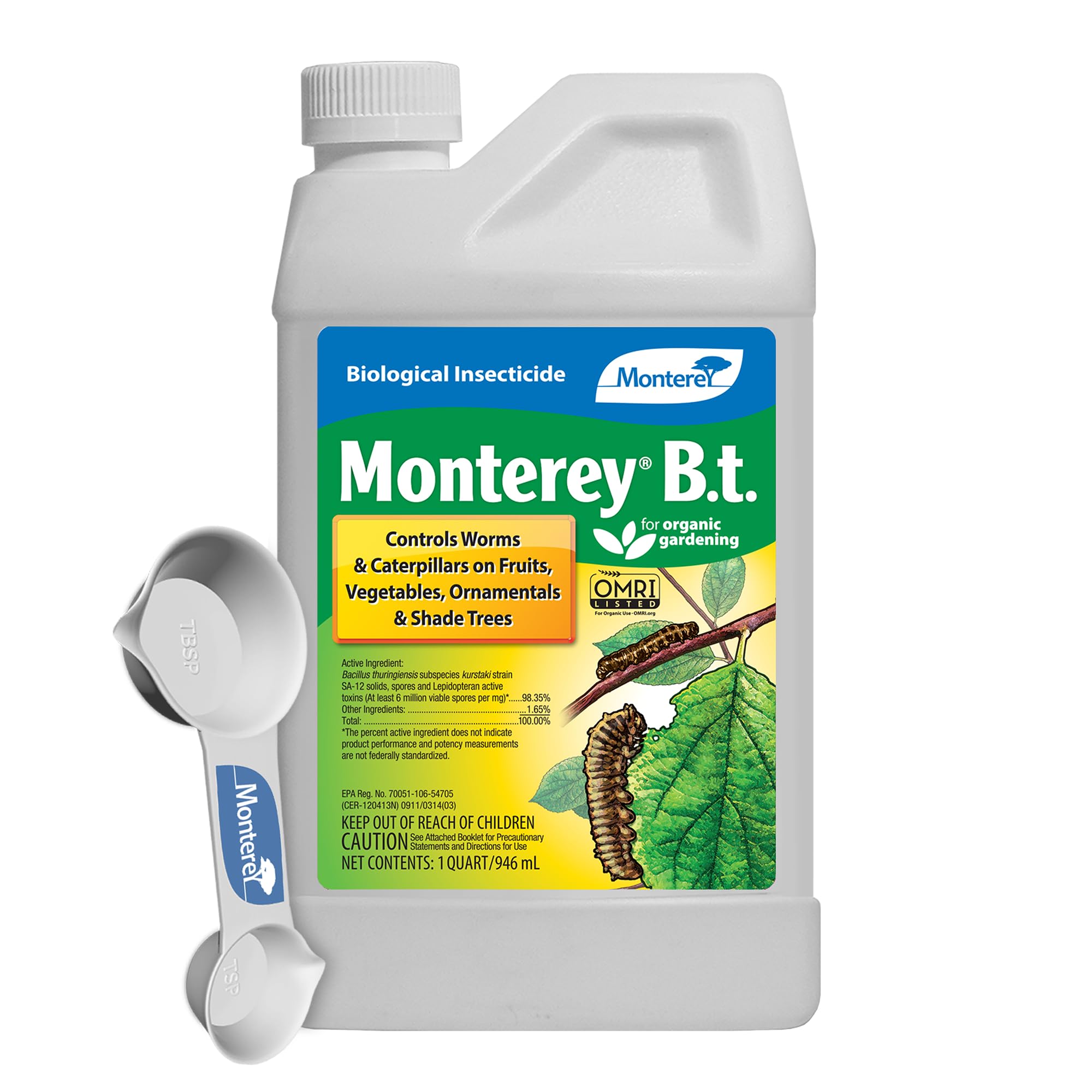
Monterey B.t. is a dependable choice for organic gardeners who want to target caterpillars and worm pests without harming helpful insects.
Pros
- Highly effective against targeted caterpillar and worm pests
- Safe for bees, ladybugs, and earthworms when used as directed
- Easy to mix and goes a long way
Cons
- Needs reapplication after rain
- Extra care needed to avoid over-application
- Measuring spoon may sometimes be missing from package
After trying Monterey B.t. in our vegetable garden, we noticed a big drop in cabbage loopers and tomato hornworms. It mixes quickly with water and sprays evenly on leaves, so we didn’t have to struggle with messy applications. Plants like broccoli and tomatoes really benefited, staying healthy and pest-free.
We appreciate that it’s organic and doesn’t harm pollinators or earthworms in the soil. It’s also useful for a wide variety of plants, from lettuce to melons to ornamentals. The product stretches far, making it cost-effective for the season.
There are a few downsides. Wet weather often calls for a second application, which means extra work. We also found that using too much can stress some plants, so measuring carefully is key. Sometimes the package is missing the measuring spoon, but overall, Monterey B.t. Caterpillar & Worm Killer is a product we come back to each season.
Natural Armor Bug & Insect Spray

This is a solid choice for those of us who want a natural option, but it may not be the strongest solution for every pest.
Pros
- Uses plant oils instead of harsh chemicals
- Easy application with a sturdy spray nozzle
- Works on a wide range of insects both inside and out
Cons
- Takes a few minutes to show results
- Only kills bugs on direct contact
- Clove scent may linger for some users
When we tried the Natural Armor Bug & Insect Spray, it was great knowing we could use it around pets and kids. The natural peppermint and clove smell is noticeable but much milder than chemical sprays. It’s a product we could apply and quickly get back to our normal routine without worrying about lingering toxins.
We liked that this spray covers many different types of bugs. It helped with ants near our baseboards and spiders hiding in corners. Outdoors, it made dealing with earwigs and roaches much simpler. The nozzle is comfortable in hand and didn’t clog, which was a nice bonus.
However, not all pests disappeared right away. We noticed it works best when sprayed directly on the bugs but isn’t as helpful for keeping them from coming back. The clove scent stays around for a while, which might be pleasant or annoying depending on your preference. For most small infestations, though, Natural Armor delivers safe and simple results.
Eco Defense Biobased Pest Spray

This is a solid choice if we want an organic spray that handles common bugs without using harsh chemicals.
Pros
- Safe to use around kids and pets
- Gets rid of many types of household pests
- Pleasant scent compared to chemical sprays
Cons
- Spray bottle can leak or clog
- Not strong enough for big infestations
- Slower to kill bugs than chemical brands
When we tried the Eco Defense spray, we noticed it worked well for smaller bug problems like ants and spiders. It felt safer to spray around our kitchen and living areas since it uses natural ingredients and doesn’t have harsh fumes. The lighter, clean smell was a nice change from other strong-smelling sprays.
We did notice that the spray doesn’t kill bugs right away—expect to wait up to a minute or so, rather than seeing instant results. Also, for large infestations like multiple roaches, we found that it struggled to keep up. It’s better suited for regular maintenance or mild problems.
Another thing we ran into was the spray bottle—it sometimes dripped or stopped working after a couple of uses. This was a bit of a hassle, but the product itself did help keep sugar ants and small pests away from food areas. For most homes, this is a good everyday option if we want a safer, natural pest control tool.
Buying Guide
When shopping for organic pest control tools, we need to look at several key features. First, we should check if a tool is safe for people, pets, and the environment. Ingredients or materials should be clearly listed. Avoid anything with unclear labels.
It’s essential to match the tool with the pest problem we have. Many products are made for certain insects or plant diseases. We should always read the packaging or instructions to see what pests it targets.
Comparing cost is helpful but not always simple. We need to look at size, amount, and price together. The table below can help us compare:
| Feature | What to Look For |
|---|---|
| Safety | Non-toxic, safe for kids and pets |
| Target Pests | Works for our specific pest concern |
| Application Method | Easy to use (spray, powder, trap, etc.) |
| Durability | Tools that last through the season |
| Coverage Area | Enough for the size of our yard/garden |
| Price | Good value for size and quantity |
Ease of use also matters. Tools like sprayers or traps should be simple to set up and use. It’s helpful if instructions are clear.
We should also think about storage. Some products lose power if stored the wrong way or for too long. We need to check shelf life and storage directions on the package.
Frequently Asked Questions
We rely on well-studied organic tools and specific techniques to keep gardens and crops healthy. Many safe products and strategies exist that avoid harsh chemicals and work well with our environment.
What are the top-rated organic pest control methods for home gardens?
We find that hand-picking pests, using insecticidal soaps, and setting physical barriers like row covers are very effective. Diatomaceous earth is useful for controlling crawling insects. We also use beneficial insects like ladybugs to help manage pest populations.
How does neem oil function as a pest deterrent in organic farming?
Neem oil disrupts the feeding and breeding of many pests by blocking their hormones. We spray it on leaves to keep insects like aphids, whiteflies, and spider mites from spreading.
Can organic pesticides be used effectively on vegetable crops?
Yes, we can use approved organic pesticides such as Bt (Bacillus thuringiensis) and pyrethrin safely on vegetable crops. It’s important to follow label directions for timing and amounts to protect both plants and helpful insects.
What strategies do organic farmers use to manage pest infestations?
We rotate crops, plant trap crops, and encourage natural enemies like wasps and birds. We also use mulching, careful watering, and regular field inspections to catch problems early before they become bigger issues.
Are there local providers who specialize in organic pest management solutions?
Many regions have businesses focused on organic pest control. We often find qualified providers by searching local directories, checking organic farming associations, or asking nearby community gardens for trusted recommendations.
What are some environmentally friendly alternatives to chemical pesticides?
We use companion planting, homemade garlic sprays, and horticultural oils as alternatives. Physical traps and regular removal of pest habitats are also helpful. Releasing useful insects is another option that avoids chemicals and helps balance our gardens.
Want to Grow Fresh Food at Home?
Grab the Beginner’s Guide to Thriving Gardens—your step-by-step plan to grow real food in any backyard, patio, or balcony. Perfect for first-time gardeners!
Buy the Ebook for $14Includes 7 free bonus guides • Instant download • Beginner-friendly


