Organic Fertilizer Tomatoes For Healthier Yields
This post may contain affiliate links. If you purchase through them, I may earn a small commission at no extra cost to you. As an Amazon Associate, I earn from qualifying purchases.
Tomatoes grow best when they have the right balance of nutrients, and organic fertilizer can help provide that. Unlike synthetic options, organic fertilizers use natural sources like composted plant matter, manure, or minerals to feed the soil. This not only supports healthier tomato plants but can also improve soil structure over time.
5 Quick-Start Garden Plans for Growing Fresh Food at Home (Free PDF)
Get beginner-friendly raised bed garden layout plans, simple container garden ideas, and a flexible salad garden plan you can put to work right away. Perfect for small spaces, patios, and first-season growers.
Instant email delivery • Unsubscribe anytime
When choosing an organic fertilizer for tomatoes, the most important factors are the nutrient ratio, the form of the fertilizer, and how it fits into your planting routine. The key detail to pay attention to is the balance of nitrogen, phosphorus, and potassium, since too much or too little of one nutrient can affect growth and fruit quality. Some fertilizers release nutrients quickly, while others work more slowly, so it’s worth considering how often you want to apply them.
With so many products available, it can be hard to know which ones actually deliver results. We tested several organic fertilizers for tomatoes to find the options that provide steady growth, strong plants, and reliable harvests.
Want to Grow Fresh Food at Home?
Grab the Beginner’s Guide to Thriving Gardens—your step-by-step plan to grow real food in any backyard, patio, or balcony. Perfect for first-time gardeners!
Buy the Ebook for $14Includes 7 free bonus guides • Instant download • Beginner-friendly
Best Organic Fertilizers for Tomatoes
We researched a range of organic fertilizers to find the most effective options for healthy tomato growth. Below is our full list of the best products to support strong plants and better harvests.
Burpee Organic Tomato & Vegetable Plant Food

This fertilizer is a solid choice if we want steady growth and healthier tomato plants without much extra work.
Pros
- Feeds plants steadily for weeks
- Easy to spread and mix into soil
- Works well for both garden beds and containers
Cons
- Granules can clump if stored in damp areas
- Results take some time to notice
- Bag could be larger for bigger gardens
We found this product simple to apply. The granules spread evenly, and once watered in, they started breaking down right away. Our tomato plants showed greener leaves after a couple of weeks, which told us the nutrients were doing their job.
It helped that this fertilizer didn’t need constant reapplying. We liked that one feeding carried the plants for most of the season. That saved us time and made the routine easier.
While the bag size is fine for small gardens, those of us with larger plots may go through it quickly. Still, the overall results made it worth keeping on hand for tomatoes and other vegetables.
Espoma Organic Tomato! Plant Food

We recommend this fertilizer if you want an easy, reliable way to boost tomato growth without harsh chemicals.
Pros
Want to Grow Fresh Food at Home?
Grab the Beginner’s Guide to Thriving Gardens—your step-by-step plan to grow real food in any backyard, patio, or balcony. Perfect for first-time gardeners!
Buy the Ebook for $14Includes 7 free bonus guides • Instant download • Beginner-friendly
- Simple to mix and apply with water
- Safe to use around kids and pets
- Helps plants perk up quickly
Cons
- Small bottle runs out fast
- Strong smell when first mixed
- May not fix advanced plant issues
We tried this fertilizer on a few tomato plants that were looking weak, and the difference showed within a day. The leaves looked greener, and the plants stood taller after a good watering with the mix. It was easy to measure and blend, which made the whole process quick.
The bottle is small, so it didn’t last long once we started using it on more than a couple of plants. For a small garden, it works fine, but larger setups will need more than one bottle. The odor is noticeable at first, though it fades after watering.
Overall, we found Espoma Organic Tomato! Plant Food dependable for keeping tomato plants healthy through the season. It’s not a cure-all for every problem, but it gave us steady, visible results without much effort.
Jobe’s Organics Tomato & Vegetable Fertilizer

We recommend this fertilizer if you want a simple, organic option that feeds tomatoes and other vegetables without synthetic chemicals.
Pros
- Easy to apply and measure
- Safe for kids and pets
- Encourages steady plant growth
Cons
- Strong smell after use
- Needs reapplication every few weeks
- Can attract pets to dig around treated soil
We found the granules easy to spread around our tomato plants, and they broke down into the soil without leaving clumps. The plants looked healthier within a couple of weeks, and we noticed stronger stems and greener leaves. It felt good knowing the formula avoided synthetic additives.
The smell was tough to ignore at first. For a few days, the garden had a strong odor, and our dog kept sniffing around the treated beds. Storing the bag in a sealed container helped limit the problem indoors.
Overall, we think Jobe’s Organics Tomato & Vegetable Fertilizer is a solid choice for anyone growing tomatoes or other vegetables organically. It takes a little effort to reapply during the season, but the results in plant health and yield made it worth it for us.
Espoma Tomato-Tone Organic Fertilizer

We recommend this fertilizer because it consistently supports strong tomato growth without harsh chemicals.
Pros
- Boosts healthy fruit production
- Includes calcium to reduce blossom end rot
- Safe for organic gardening
Cons
Want to Grow Fresh Food at Home?
Grab the Beginner’s Guide to Thriving Gardens—your step-by-step plan to grow real food in any backyard, patio, or balcony. Perfect for first-time gardeners!
Buy the Ebook for $14Includes 7 free bonus guides • Instant download • Beginner-friendly
- Has a strong odor
- Needs reapplication every two weeks
- May not supply enough nitrogen for some crops
When we used Espoma Tomato-Tone in our garden, the difference showed within weeks. The plants looked sturdier, and the fruit set was steady. The added calcium was especially helpful since we didn’t see the usual end rot issues that sometimes show up mid-season.
Application was simple since the product comes ready to use. We just spread it around the base of the plants and watered it in, which saved us time compared to liquid mixes. The only drawback was the smell, which reminded us to store the bag outside instead of in the shed.
Overall, this fertilizer gave us reliable results. Our tomato plants produced more fruit and stayed healthier through the season. For anyone growing tomatoes organically, Espoma Tomato-Tone is a solid option that balances ease of use with effective performance.
True Organic Tomato & Veg Food

We recommend this fertilizer if you want steady growth and healthier tomato plants without using synthetic products.
Pros
- Simple to measure and mix into water
- Noticeable boost in plant health within weeks
- Works in both pots and garden beds
Cons
- Strong odor during use
- Needs reapplication every two weeks
- Coverage may be limited for larger gardens
When we tried True Organic Tomato & Veg Food, the results showed up quickly. Our tomato plants perked up with greener leaves, and we saw more consistent flowering. The liquid form made it easy to mix and apply, which saved us time compared to granular options.
The smell is noticeable, and it lingers when first applied. While it’s not pleasant, we did notice fewer small animals around the garden, so it might have an unintended benefit. Still, we recommend using it outdoors or in a well-ventilated space.
We also found the coverage worked well for a small raised bed and several containers. For larger gardens, though, the bottle runs out faster than expected. Overall, this fertilizer gave us reliable growth and healthier plants, making it a solid choice for anyone focused on organic gardening.
Old Farmer’s Almanac Organic Tomato & Vegetable Fertilizer
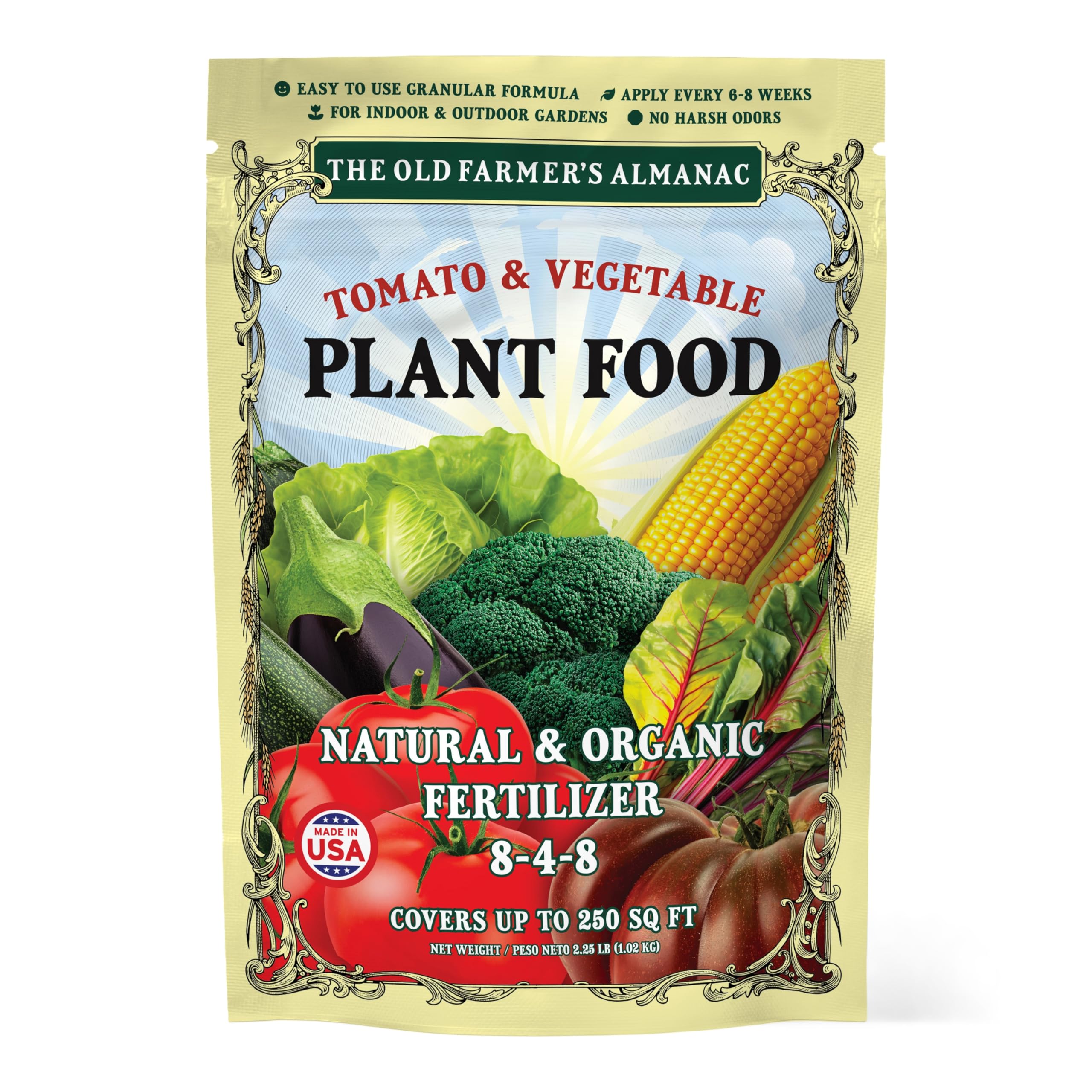
This fertilizer is a solid choice if we want an organic option that supports steady growth in tomatoes and vegetables.
Pros
- Easy to spread granules that don’t clump
- Gentle formula that won’t burn plants
- Comes in a resealable bag for storage
Cons
- Results take time to notice
- Scent is a bit strong when first applied
- Bag size may not cover large gardens
When we worked this fertilizer into the soil around our tomato plants, the granules blended in smoothly without leaving a mess. It felt simple to apply, and the resealable bag kept the product fresh between uses.
We noticed the plants stayed healthy and green, but the changes were gradual rather than immediate. That’s expected with organic fertilizers, and it gave us confidence the nutrients were being released slowly.
The only drawback we found was the smell right after application, which faded after a day or two. For small to mid-sized gardens, the bag provided enough coverage, but bigger plots might need more than one. Overall, it gave us steady results without being harsh on the plants.
Dr. Earth Tomato & Veg Fertilizer

We recommend this fertilizer if you want steady growth and healthier tomato plants without relying on synthetic ingredients.
Pros
- Feeds plants for months without constant reapplication
- Improves soil health with added microbes and mycorrhizae
- Certified organic with no harsh fillers
Cons
- Strong smell that attracts pets
- Costs more than some other options
- Powder form can be messy to handle
When we worked this fertilizer into our tomato bed, we noticed stronger stems and greener leaves within a couple of weeks. It didn’t burn the plants, which is something we’ve had happen with harsher formulas. The slow release was helpful since we didn’t have to keep adding more every week.
The soil itself felt richer after using it. We like that it improves the ground over time, not just the plants. The added microbes seemed to make a difference in how well the roots took hold, especially in our raised beds.
The only real downside we ran into was the smell. Our dog kept trying to dig in the garden, so we had to put up a small barrier. It’s also pricier than some fertilizers, but we felt the results justified the cost. If you want organic tomatoes that actually thrive, this product is worth considering.
FoxFarm Happy Frog Tomato Fertilizer

We recommend this fertilizer for anyone who wants steady tomato growth with healthier plants and stronger yields.
Pros
- Boosts root strength and nutrient uptake
- Produces steady, healthy tomato growth
- Easy to spread and work into soil
Cons
- Bag size runs out fast in larger gardens
- Smell is earthy and noticeable at first
- Can clump a bit if stored in damp areas
We noticed quick improvements after mixing this fertilizer into our tomato beds. The plants looked greener within a week, and the new growth came in strong. It was simple to apply, and the granules blended into the soil without much effort.
Our tomatoes set more blossoms than usual, and the fruits developed with fewer signs of stress. The added calcium seemed to help because we didn’t see the blossom end rot that sometimes shows up in mid-season. It also worked well on peppers and lettuce, which made the bag feel more useful across the garden.
The only drawback we found is the 4-pound bag doesn’t last long when used on several plants. We had to buy a second bag halfway through the season. Still, the results made it worth it, and we plan to keep using FoxFarm Happy Frog Tomato Fertilizer in future plantings.
Buying Guide
When we choose organic fertilizer for tomatoes, we should focus on the nutrients it provides. Tomatoes need a balance of nitrogen, phosphorus, and potassium. Too much nitrogen can cause leafy growth but fewer fruits.
We also want to check if the fertilizer contains added calcium and magnesium. These help prevent blossom end rot and support steady growth. A balanced mix supports both strong roots and healthy fruit.
It helps to look at how the fertilizer is applied. Some come in granules we mix into the soil, while others are liquid and applied with water. Granules release nutrients slowly, while liquids act faster.
We should also consider the source of ingredients. Fertilizers made from compost, manure, or plant-based materials usually work well for tomatoes. Choosing certified organic products ensures they meet organic standards.
Key Features to Compare
| Feature | What to Look For |
|---|---|
| Nutrient Balance | NPK ratio suited for fruiting plants |
| Added Minerals | Calcium and magnesium for fruit health |
| Application Type | Granular for slow release, liquid for fast |
| Ingredient Source | Natural, organic-certified materials |
| Ease of Use | Simple directions and clear labeling |
When we compare options, we should read the label carefully. Clear instructions and nutrient details help us match the fertilizer to our tomato plants’ needs.
Frequently Asked Questions
We focus on the right balance of nutrients, timing of fertilization, and simple homemade options that support strong tomato growth. We also cover what to consider for container gardening and how certain natural additives can improve plant health.
What are the optimal NPK ratios for tomato plants?
We recommend a balanced fertilizer with a ratio close to 5-10-10 or 4-6-8. Tomatoes need less nitrogen than phosphorus and potassium to avoid excess leafy growth and encourage fruit production.
How often should I fertilize my tomato plants during the growing season?
We usually fertilize every 2 to 3 weeks once the plants start setting fruit. Early in the season, we apply fertilizer at transplanting, then continue at regular intervals to maintain steady nutrient levels.
What are the benefits of using homemade organic fertilizers for tomatoes?
We find homemade fertilizers reduce costs and give us control over the ingredients. They also improve soil health by adding organic matter and supporting beneficial microorganisms.
Can you recommend an effective homemade liquid fertilizer recipe for tomato plants?
We often use a simple mix of compost tea made by soaking finished compost in water for 24 to 48 hours. This provides a mild, nutrient-rich liquid that can be applied directly to the soil around the plants.
What should I look for when choosing an organic fertilizer for tomatoes grown in containers?
We look for a slow-release formula that includes micronutrients like calcium and magnesium. Container plants need steady feeding since nutrients wash out faster with frequent watering.
Are there any secret ingredients that can be added to organic fertilizers to boost tomato growth?
We sometimes add crushed eggshells for calcium to help prevent blossom end rot. Another useful addition is seaweed extract, which provides trace minerals and supports root development.
Want to Grow Fresh Food at Home?
Grab the Beginner’s Guide to Thriving Gardens—your step-by-step plan to grow real food in any backyard, patio, or balcony. Perfect for first-time gardeners!
Buy the Ebook for $14Includes 7 free bonus guides • Instant download • Beginner-friendly
