Organic Fertilizer for Garden Tips and Benefits
This post may contain affiliate links. If you purchase through them, I may earn a small commission at no extra cost to you. As an Amazon Associate, I earn from qualifying purchases.
Organic fertilizer gives gardens the nutrients they need without relying on synthetic chemicals. It comes from natural sources like compost, manure, or plant-based materials, and it helps improve soil health over time. Many gardeners choose organic fertilizer because it supports long-term soil balance and encourages strong, steady plant growth.
5 Quick-Start Garden Plans for Growing Fresh Food at Home (Free PDF)
Get beginner-friendly raised bed garden layout plans, simple container garden ideas, and a flexible salad garden plan you can put to work right away. Perfect for small spaces, patios, and first-season growers.
Instant email delivery • Unsubscribe anytime
When shopping for organic fertilizer, we need to pay attention to the nutrient balance, the form it comes in (such as liquid, pellets, or powder), and whether it fits the specific needs of the plants we are growing. The most important factor is making sure the fertilizer provides the right mix of nutrients for the soil and plants in your garden. Some fertilizers are better for vegetables, while others may work well for flowers or lawns.
With so many options available, it can be hard to know which product will give the best results. We researched and tested a range of organic fertilizers to find the ones that make feeding your garden simple and effective.
Want to Grow Fresh Food at Home?
Grab the Beginner’s Guide to Thriving Gardens—your step-by-step plan to grow real food in any backyard, patio, or balcony. Perfect for first-time gardeners!
Buy the Ebook for $14Includes 7 free bonus guides • Instant download • Beginner-friendly
Best Organic Fertilizers for Gardens
We reviewed a range of organic fertilizers to find options that support healthy soil and strong plant growth. Below we share our top picks that provide balanced nutrients and are easy to use in home gardens.
Down to Earth Vegetable Fertilizer

We recommend this fertilizer if you want an easy, reliable way to feed a vegetable garden without using synthetic chemicals.
Pros
- Provides steady, slow-release nutrition
- Safe around pets, pollinators, and soil life
- Works well for a wide range of garden vegetables
Cons
- Noticeable earthy smell when applied
- Packaging needs protection from moisture
- Nutrients release gradually, so results take time
When we worked this fertilizer into our raised beds, we noticed how simple it was to spread and mix into the soil. The granules broke down evenly, and we didn’t have to worry about burning the plants. It felt straightforward, which made the process less of a chore.
Our tomatoes, peppers, and greens responded with steady growth over the season. The balanced 4-4-4 mix gave them what they needed without pushing too much foliage or stressing the plants. We didn’t see instant results, but the slow release kept them looking healthy week after week.
One thing we learned is to store the box in a dry spot. The paper packaging can soften if left outside, and the natural ingredients do carry a strong smell. Still, the benefits outweighed these small drawbacks, and we felt good knowing we were adding organic matter that supports the soil long term.
Burpee Organic Plant Food

This fertilizer works well for gardeners who want an easy, reliable way to feed a variety of plants without using synthetic products.
Pros
Want to Grow Fresh Food at Home?
Grab the Beginner’s Guide to Thriving Gardens—your step-by-step plan to grow real food in any backyard, patio, or balcony. Perfect for first-time gardeners!
Buy the Ebook for $14Includes 7 free bonus guides • Instant download • Beginner-friendly
- Feeds steadily for weeks without constant reapplication
- Easy to spread and mix into soil
- Safe for use on vegetables, flowers, and containers
Cons
- Granules can clump if stored in damp places
- Takes time to see visible results in some plants
- Packaging could be sturdier for long-term storage
We liked how simple it was to apply the Burpee granules. The texture made it easy to sprinkle around the base of our plants, and we didn’t have to worry about burning roots. It blended into the soil quickly, and watering helped it settle in without any mess.
Our vegetable beds responded well after a few weeks. The tomatoes and peppers looked stronger, and the leaves stayed a healthy green. It didn’t provide instant results, but the steady growth over time felt dependable and consistent.
One thing we noticed is that the bag isn’t very durable. If it gets left outside or in a damp shed, the granules can stick together. We recommend keeping it sealed tight and stored in a dry spot. Despite that, the performance in the garden outweighed the minor storage issue.
Back to the Roots Plant Food

This organic fertilizer is a solid choice for anyone wanting a safe, plant-based option that works across herbs, flowers, and vegetables.
Pros
- Gentle formula that won’t burn plants
- Plant- and mineral-based ingredients only
- Works for both indoor and outdoor gardens
Cons
- Can leave a bit of residue when mixed with water
- May encourage fungal growth if soil stays too wet
- Has a strong earthy smell some may not like
We found this blend easy to use because there’s no risk of overfeeding and damaging plants. The powder mixes well, and it gave our herbs and vegetables a noticeable boost in growth within a few weeks. It’s nice not having to worry about synthetic chemicals or animal by-products.
Using it outdoors felt straightforward, and the results were consistent. Indoors, we did notice that if the soil stayed damp too long, some mushroom-like growth appeared. It wasn’t harmful, but it’s something to keep an eye on if you’re feeding houseplants.
The smell is natural but stronger than expected, which might bother some people. For us, the benefits outweighed that small drawback, especially because the plants looked healthier and produced better. Overall, it’s a reliable, all-purpose option for gardeners who want something simple and safe.
Jobe’s Organics Garden Fertilizer

This fertilizer is a solid choice if we want an easy, organic way to feed vegetables without worrying about harmful chemicals.
Pros
- Feeds plants steadily and keeps them looking healthy
- Safe to use around kids and pets
- Granules are easy to measure and spread
Cons
Want to Grow Fresh Food at Home?
Grab the Beginner’s Guide to Thriving Gardens—your step-by-step plan to grow real food in any backyard, patio, or balcony. Perfect for first-time gardeners!
Buy the Ebook for $14Includes 7 free bonus guides • Instant download • Beginner-friendly
- Strong odor lingers for a few days
- Needs reapplication every few weeks
- Can attract pets that dig around the soil
We found the granules simple to work with, and they blended into the soil without much effort. Our tomato plants responded well after a few weeks, showing stronger growth and deeper green leaves. The bag size felt manageable for a small to medium garden.
The smell stood out right away, and it stayed noticeable for a short time after application. While it’s not pleasant, it’s expected with organic fertilizers. We stored the bag in a sealed container to keep the odor under control.
Overall, we liked how Jobe’s Organics Garden Fertilizer gave our vegetables steady nutrition without the risk of overfeeding. It’s not perfect, but the results in the garden made it worth using.
Old Farmer’s Almanac Organic Plant Food
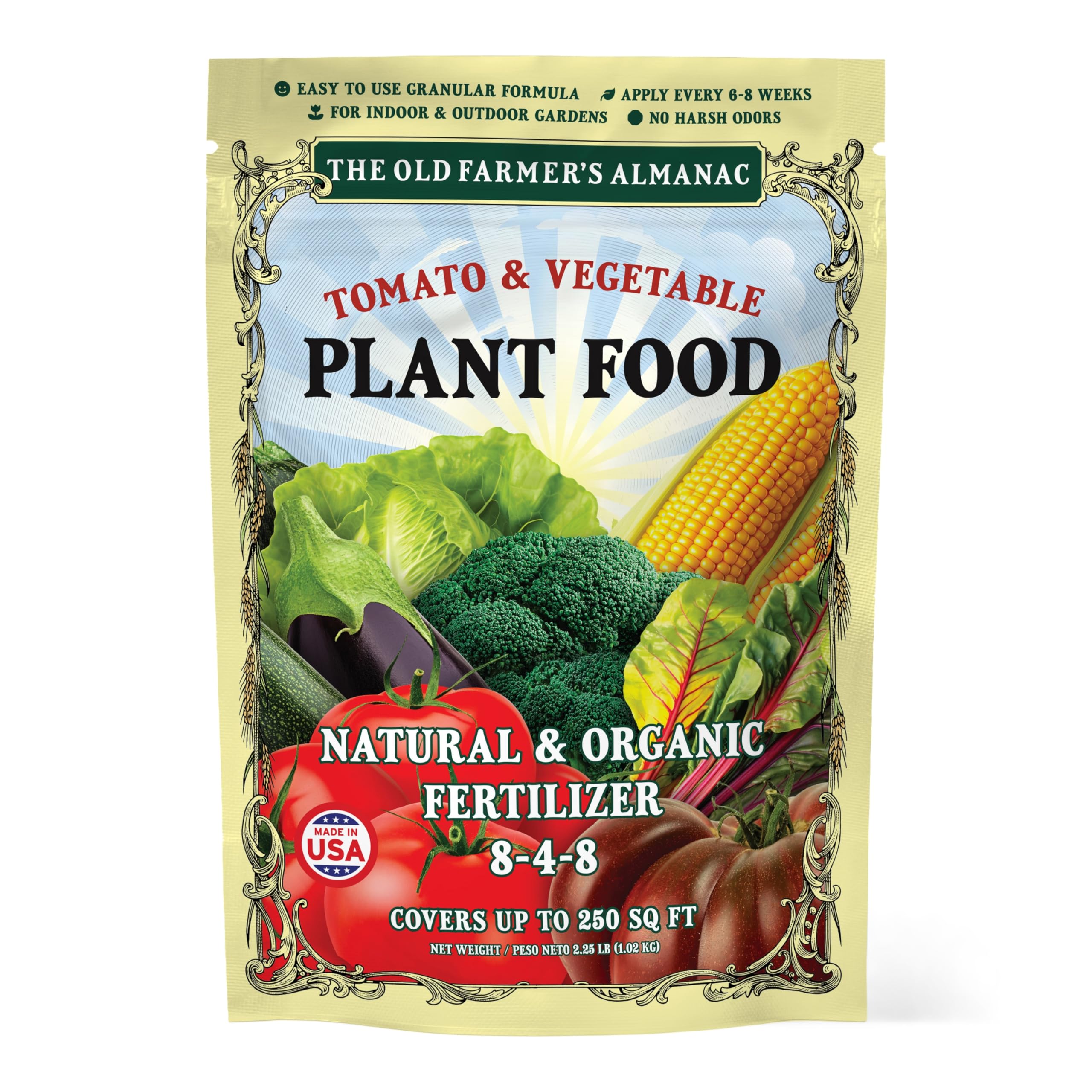
This fertilizer makes sense for anyone who wants an easy, organic way to feed vegetables without overcomplicating the process.
Pros
- Granules spread evenly and are simple to apply
- Gentle formula that doesn’t burn plants
- Resealable bag keeps it fresh between uses
Cons
- Results take time to notice
- Strong earthy smell when first opened
- Bag size may feel small for larger gardens
We found this fertilizer straightforward to use. The granules poured smoothly, and we liked that they didn’t clump or create a mess. It felt natural to work them into the soil around our tomato and pepper plants.
The plants responded steadily, though not overnight. We noticed healthier leaves and stronger stems after a few weeks, which gave us confidence that the nutrients were doing their job. The slow release seemed to help avoid sudden growth spurts that can stress plants.
Storage was simple with the resealable bag, and we appreciated not having to worry about it going stale. While the scent was noticeable at first, it faded quickly once watered in. For small to mid-size gardens, this product offered a balanced way to keep vegetables fed without much hassle.
Espoma Plant-Tone Organic Fertilizer

We recommend this fertilizer because it delivers steady growth for a wide range of plants without complicated steps.
Pros
- Provides slow, consistent feeding
- Works well on vegetables, flowers, and shrubs
- Easy to apply with no mixing needed
Cons
- Bag is heavy to handle
- Price can be higher than local options
- Has a natural earthy smell some may dislike
We found Espoma Plant-Tone simple to use right out of the bag. The granules spread evenly around the base of plants, and we noticed healthier foliage within a few weeks. It doesn’t overwhelm the soil, which makes it a safe choice for both new and experienced gardeners.
Our vegetables responded especially well. Tomatoes grew strong vines and produced steady fruit, while peppers developed thick stems and bright leaves. Flowers also seemed more vibrant, which made the garden look fuller and healthier overall.
The only drawback we noticed was the weight of the 36-pound bag, which can be awkward to move around. It also costs a bit more compared to some local store brands. Still, the results made it worth keeping on hand for both seasonal and year-round gardening.
Dr. Earth Home Grown Fertilizer

This organic fertilizer is a solid choice if we want healthy vegetables and herbs without synthetic additives.
Pros
- Improves soil health over time
- Provides steady feeding for months
- Uses only natural and organic ingredients
Cons
- Dogs may dig in treated soil
- Smell can be strong at first
- Costs more than basic fertilizers
We noticed quick improvement in our basil after applying this fertilizer, with greener leaves showing within days. It didn’t burn the plants, and the growth felt steady rather than rushed. That slow release makes it easy to forget about constant reapplication.
The texture mixes well into raised beds and containers. We like that it contains beneficial microbes, which seem to boost soil life and keep the roots more resilient. Our tomatoes and peppers looked stronger through hot weather compared to past seasons.
One drawback is the smell, which pets seem to find too interesting. We had to block off certain areas to keep them from digging. The price also runs higher than some other options, but we felt the results justified the cost. For those of us focused on organic gardening, it’s a dependable product worth using.
Espoma Garden-Tone Fertilizer

We recommend this fertilizer if you want a reliable organic option that feeds vegetables steadily without extra effort.
Pros
- Encourages steady growth in both leafy greens and fruiting plants
- Easy to apply with no mixing required
- Safe for organic gardening and soil health
Cons
- Strong odor that lingers after use
- Needs reapplication each month
- Granules can attract pets if left uncovered
We found that Garden-Tone worked well across different crops in our beds. Tomatoes and peppers responded with stronger stems, while lettuce and kale looked fuller after a few weeks. The feeding seemed balanced without causing fast, weak growth.
Using it was simple since the granules spread evenly around the base of the plants. After watering, they soaked in quickly, and we didn’t have to fuss with mixing or measuring liquids. The resealable bag also kept things tidy in storage.
The biggest drawback was the smell, which is strong enough that we made sure to apply it on breezy days. It also requires monthly feeding, so it’s not a set-and-forget product. Even so, the results in our garden made the extra effort worth it.
Buying Guide
When we shop for organic fertilizer, we need to think about what our soil and plants actually need. Not every fertilizer works the same, so checking the label is important.
We should look at the N-P-K ratio (Nitrogen, Phosphorus, Potassium). This tells us how much of each nutrient is in the product. A balanced ratio works for general use, while higher nitrogen helps leafy plants.
It also helps to know if the fertilizer is slow-release or fast-release. Slow-release feeds plants over time, while fast-release gives a quick boost. Choosing the right type depends on whether we want steady growth or faster results.
We should also check if the fertilizer is in granular, liquid, or pellet form. Granular is easy for large areas, liquid works well for quick absorption, and pellets are simple to spread evenly.
| Feature | What to Check | Why It Matters |
|---|---|---|
| Nutrient Ratio | N-P-K numbers on the label | Matches plant and soil needs |
| Release Type | Slow-release or fast-release | Controls how quickly nutrients work |
| Form | Granular, liquid, or pellets | Affects ease of use and application |
| Ingredients | Plant, animal, or mineral based | Helps match soil type and preferences |
We should always consider the ingredients. Some fertilizers use plant-based materials, while others use animal or mineral sources. Choosing the right one depends on what we prefer and what our soil responds to best.
Frequently Asked Questions
We often look at how organic fertilizers affect plant growth, soil health, and long-term garden care. We also compare different types, explore homemade options, and review trusted products.
What are the benefits of using organic fertilizers in a garden?
Organic fertilizers release nutrients slowly, which helps plants grow steadily. They also improve soil structure by adding organic matter. This supports healthy roots and better water retention.
How can you make your own organic fertilizer for vegetables?
We can use compost made from kitchen scraps and yard waste. Crushed eggshells add calcium, while coffee grounds provide nitrogen. Mixing these into the soil gives vegetables a steady source of nutrients.
What should you consider when choosing an organic fertilizer for your garden?
We should check the nutrient balance on the label, often shown as N-P-K (nitrogen, phosphorus, potassium). It’s also important to match the fertilizer to the type of plants we are growing. Availability and cost may also guide our choice.
How do organic liquid fertilizers compare to solid organic fertilizers?
Liquid fertilizers act faster because plants absorb them through roots and leaves. Solid fertilizers release nutrients more slowly, which supports long-term soil health. Many gardeners use both depending on plant needs.
Can organic fertilizers improve soil health over time?
Yes, they add organic matter that feeds soil organisms. This increases microbial activity and improves soil texture. Over time, soil becomes more fertile and easier to work with.
What are some highly recommended brands of organic fertilizer for garden use?
Brands like Espoma, Dr. Earth, and Jobe’s Organics are widely used. These products come in different forms such as powders, pellets, or liquids. They are available in many garden centers and online stores.
Want to Grow Fresh Food at Home?
Grab the Beginner’s Guide to Thriving Gardens—your step-by-step plan to grow real food in any backyard, patio, or balcony. Perfect for first-time gardeners!
Buy the Ebook for $14Includes 7 free bonus guides • Instant download • Beginner-friendly

