Gas Handheld Leaf Blower Buying Guide
This post may contain affiliate links. If you purchase through them, I may earn a small commission at no extra cost to you. As an Amazon Associate, I earn from qualifying purchases.
Gas handheld leaf blowers give us a quick way to clear leaves, grass clippings, and other debris from yards and driveways. Unlike rakes or brooms, these tools use powerful air streams to move large amounts of material with less effort. They are popular with homeowners who want speed and convenience, as well as with people who maintain larger outdoor spaces.
5 Quick-Start Garden Plans for Growing Fresh Food at Home (Free PDF)
Get beginner-friendly raised bed garden layout plans, simple container garden ideas, and a flexible salad garden plan you can put to work right away. Perfect for small spaces, patios, and first-season growers.
Instant email delivery • Unsubscribe anytime
When choosing a gas handheld leaf blower, we need to pay close attention to weight, power, noise, and fuel efficiency. The most important factor is finding a balance between power and comfort, since a blower that is too heavy or too weak will make the job harder instead of easier. Noise level and emissions also matter, especially in neighborhoods with restrictions or for people who want a cleaner-running tool.
With so many models available, it can be hard to know which ones are worth the investment. We tested a range of gas handheld leaf blowers to find the options that deliver strong performance while staying comfortable to use.
Want to Grow Fresh Food at Home?
Grab the Beginner’s Guide to Thriving Gardens—your step-by-step plan to grow real food in any backyard, patio, or balcony. Perfect for first-time gardeners!
Buy the Ebook for $14Includes 7 free bonus guides • Instant download • Beginner-friendly
Best Gas Handheld Leaf Blowers
We reviewed the top gas handheld leaf blowers to help make yard work faster and easier. Our picks focus on power, ease of use, and durability so we can choose the right tool for keeping outdoor spaces clean.
Husqvarna 125B Gas Leaf Blower
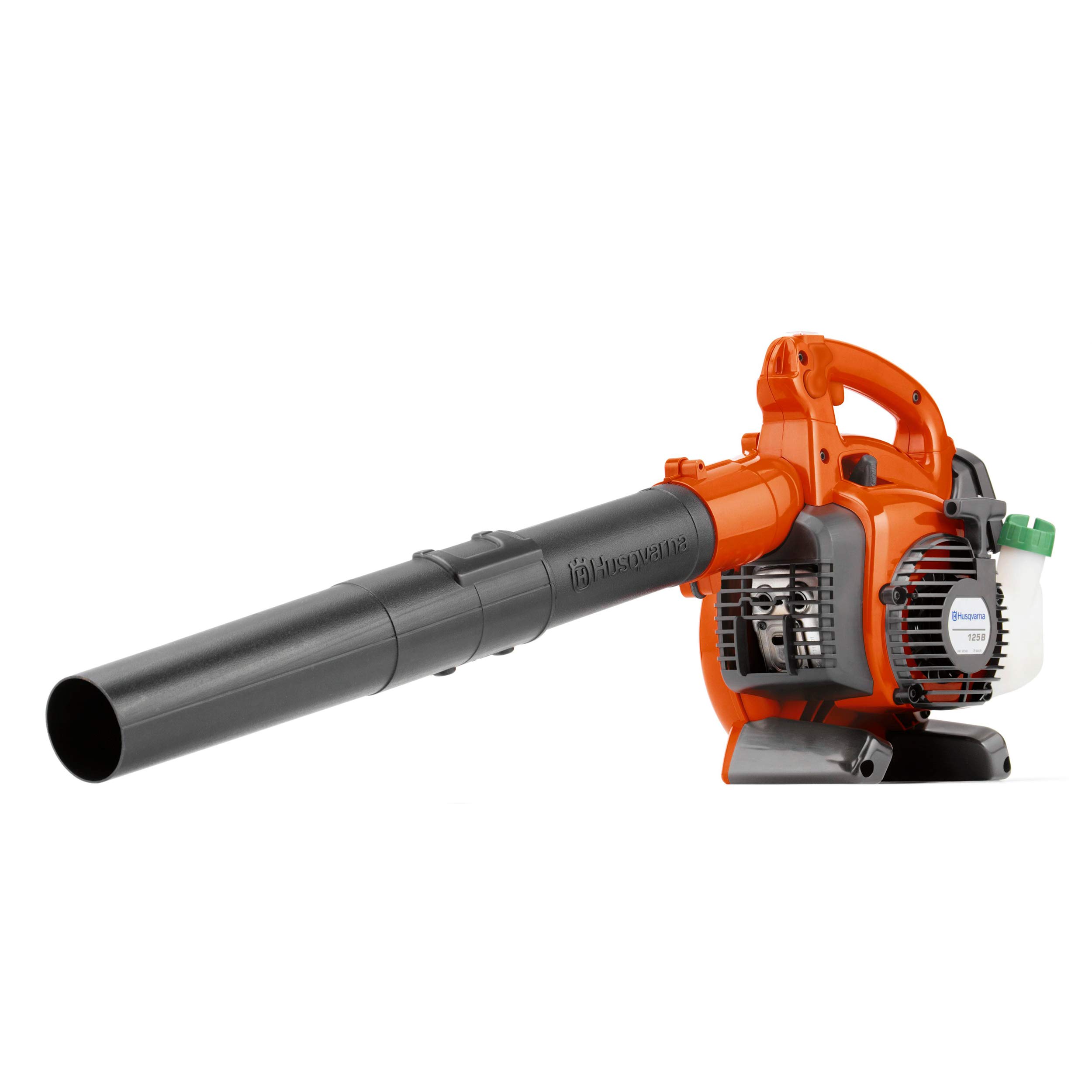
We recommend this blower for homeowners who want reliable power in a lightweight tool without spending too much time on setup.
Pros
- Strong airflow clears leaves and debris quickly
- Lightweight design reduces arm fatigue
- Cruise control makes longer jobs easier
Cons
- Can be loud during use
- Needs regular fuel mixing and maintenance
- Not ideal for heavy commercial work
We found the Husqvarna 125B easy to handle right away. Its weight feels balanced, so moving around the yard doesn’t wear us out. The adjustable tube helps direct the airflow where we need it, which makes it more versatile than some other models we’ve tried.
Starting the blower takes little effort thanks to the auto-return stop switch. We also liked the cruise control feature because it kept the speed steady without constant adjustments. That made clearing larger areas more comfortable.
Noise is the main drawback. It’s not unbearable, but we definitely prefer using ear protection. For homeowners with typical yard work, this blower delivers solid performance at a manageable size. It’s not built for professional crews, but for regular leaf cleanup, it gets the job done well.
CRAFTSMAN B210 Gas Leaf Blower

This blower makes sense for anyone who wants a reliable gas option that balances power with ease of use.
Pros
Want to Grow Fresh Food at Home?
Grab the Beginner’s Guide to Thriving Gardens—your step-by-step plan to grow real food in any backyard, patio, or balcony. Perfect for first-time gardeners!
Buy the Ebook for $14Includes 7 free bonus guides • Instant download • Beginner-friendly
- Starts up with little effort
- Strong airflow for small to medium jobs
- Comfortable to carry for short tasks
Cons
- Can feel heavy after extended use
- Not ideal for large piles of wet leaves
- A bit noisy compared to battery models
We found the CRAFTSMAN B210 easy to get running, which is not always the case with gas blowers. The pull start felt smooth, and once it warmed up, it stayed consistent without stalling. That made it less frustrating to use right out of the box.
The airflow handled dry leaves and grass clippings without issue. It cleared sidewalks and driveways quickly, and the nozzle scraper came in handy for stuck debris. For bigger cleanup jobs, though, it lacked the push of higher-end models.
Weight is manageable, but after about 20 minutes we noticed some arm fatigue. It’s fine for quick yard work, but those with larger lots may want something lighter or with a shoulder strap. Noise is also worth mentioning—this is louder than the cordless blowers we’ve used, so ear protection is a smart idea.
Relxxon Gas Leaf Blower
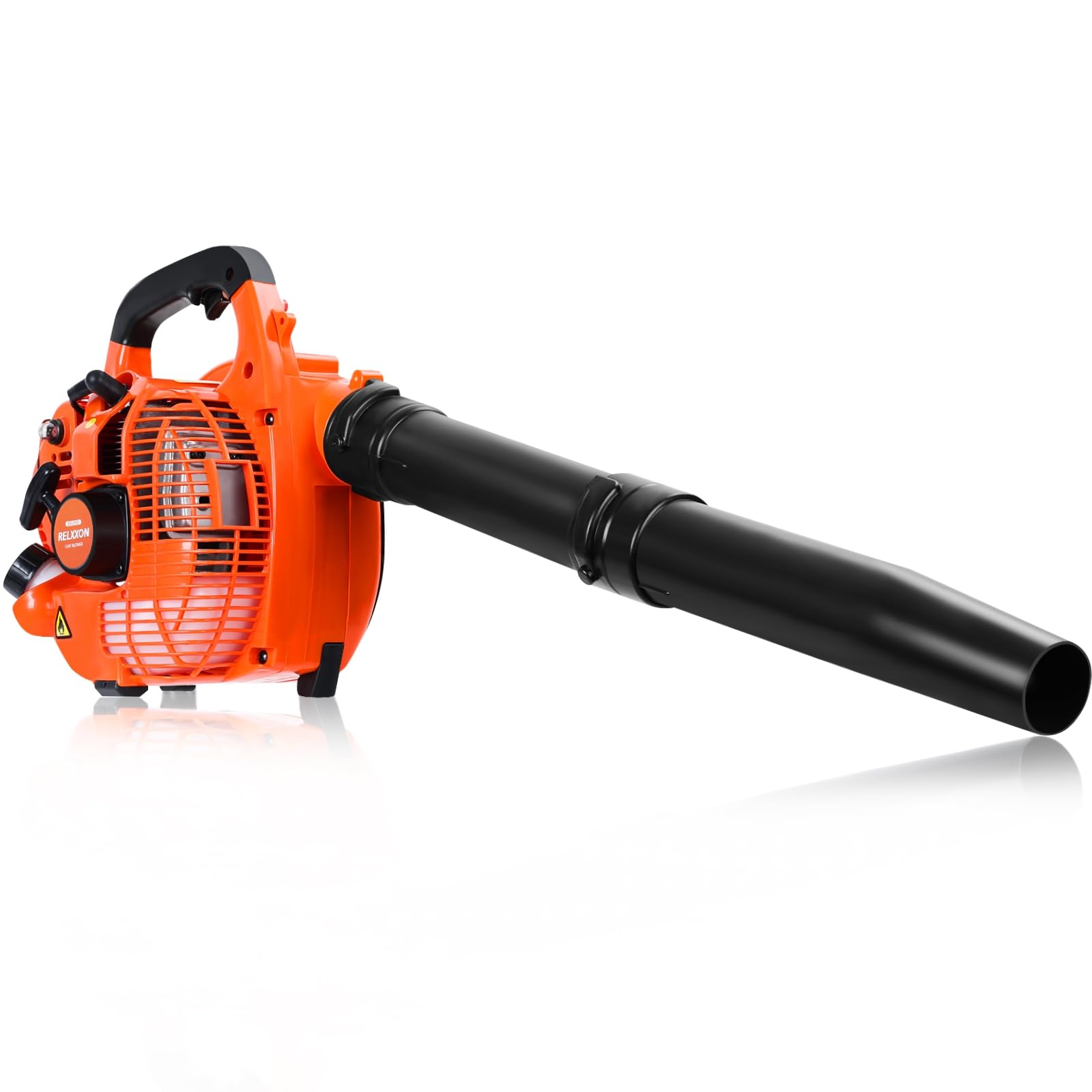
We think this blower is a solid choice for small to medium yards if you want decent power without spending a lot.
Pros
- Strong airflow clears leaves and clippings quickly
- Lightweight design makes it easier to carry around
- Comfortable grip reduces hand strain during longer use
Cons
- Starting can be tricky the first few times
- Instructions are not very clear
- Build quality feels average in some parts
When we tested this blower, the first thing we noticed was the power. The 26cc engine pushed out enough force to move damp leaves and even light snow off the driveway. For a handheld unit, it felt like it had more strength than we expected.
Carrying it around the yard wasn’t tiring. At just under 10 pounds, the weight felt balanced, and the soft grip made it easier to hold for longer stretches. We didn’t feel the same fatigue we’ve had with heavier blowers.
The downside came with starting it. While the pull cord wasn’t heavy, it sometimes took a few tries to get running. Once it was going, though, the throttle control worked smoothly, and we could adjust airflow depending on the area we were clearing.
Overall, the Relxxon Gas Leaf Blower gets the job done well, but it requires some patience at startup and could use clearer instructions. For the price, it’s still a capable tool for regular yard cleanup.
ECHO PB-2620 Handheld Leaf Blower
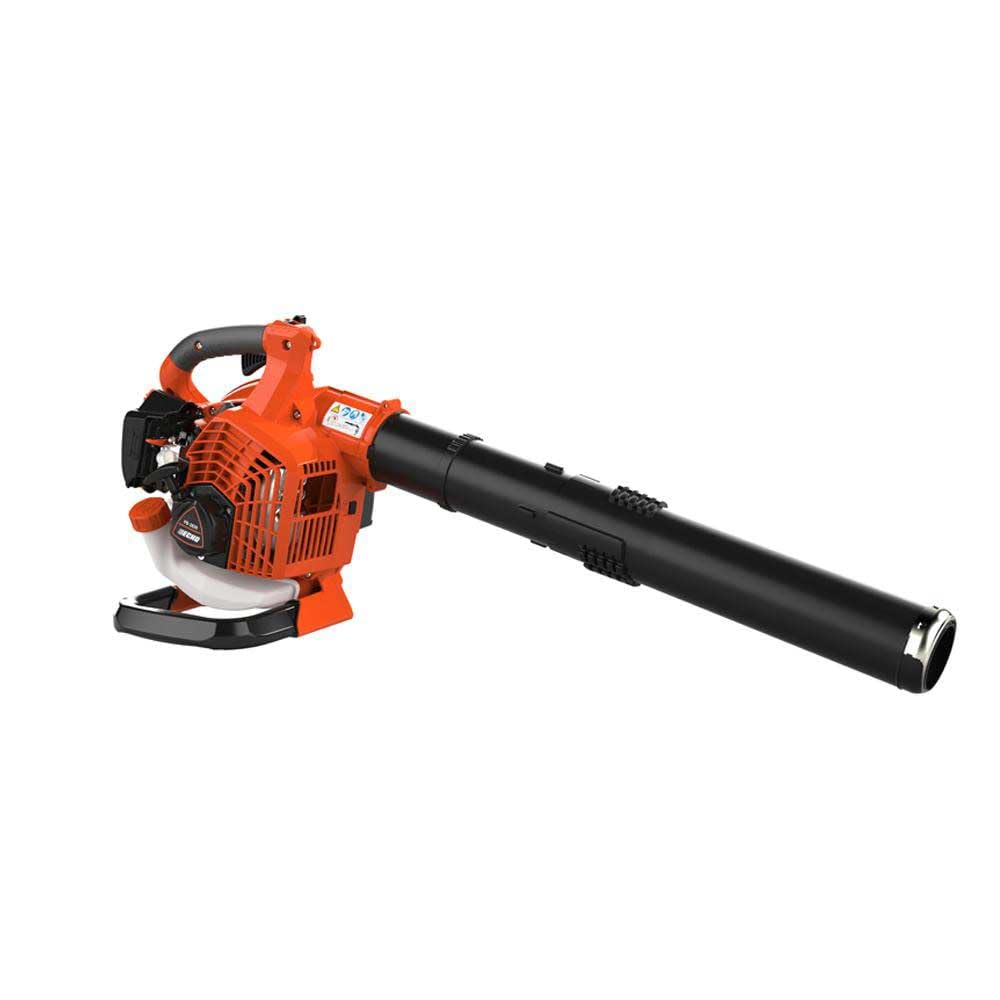
We recommend this blower for anyone who wants a reliable gas-powered tool that balances strong airflow with easy handling.
Pros
Want to Grow Fresh Food at Home?
Grab the Beginner’s Guide to Thriving Gardens—your step-by-step plan to grow real food in any backyard, patio, or balcony. Perfect for first-time gardeners!
Buy the Ebook for $14Includes 7 free bonus guides • Instant download • Beginner-friendly
- Starts quickly without much effort
- Strong airflow clears leaves fast
- Comfortable grip for longer use
Cons
- A bit heavier than some handheld models
- Needs occasional carb adjustment
- Noise level is noticeable in small yards
We found the ECHO PB-2620 Handheld Leaf Blower easy to start, often firing up on the first pull. The throttle responds smoothly, so we could control the airflow without much fuss. It felt dependable right from the start.
The blower delivered steady power when clearing damp leaves and heavier yard debris. While it isn’t the lightest unit we’ve used, the balance and handle design kept it manageable for longer sessions. We appreciated the guard that kept loose clothing from being pulled into the intake.
After extended use, we noticed the weight a little more, and the sound level could be tiring without ear protection. Still, the performance outweighed these drawbacks. For us, it struck a good balance between strength, comfort, and durability, making it a solid choice for regular yard work.
PROYAMA Gas Leaf Blower 3-in-1
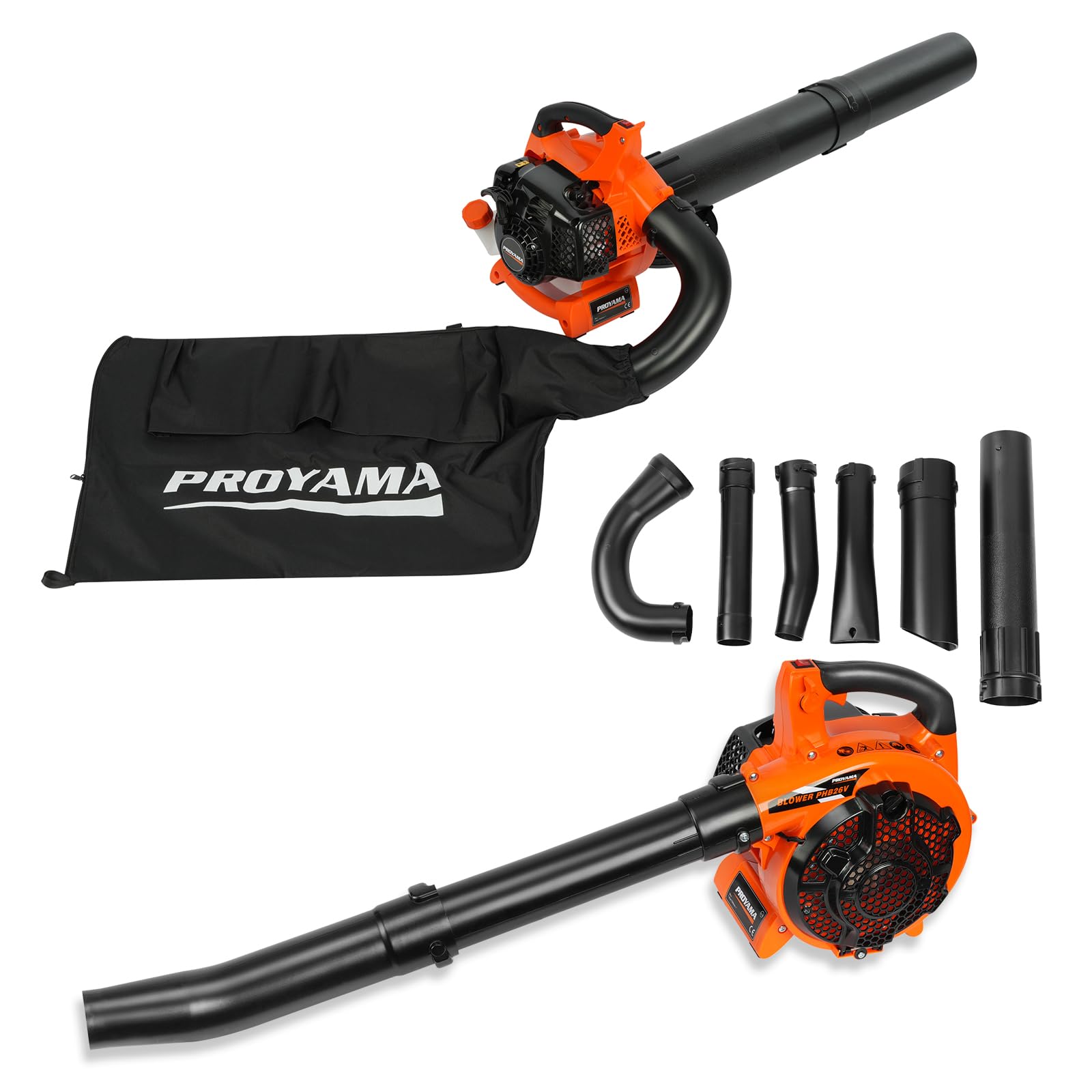
This blower makes sense for buyers who want a budget-friendly gas option that can handle blowing, vacuuming, and mulching in one tool.
Pros
- Strong airflow clears leaves and small debris quickly
- Mulching bag reduces leaf volume and saves disposal space
- Cruise control helps reduce hand strain
Cons
- Heavier than expected for longer jobs
- Plastic parts feel fragile in spots
- Louder operation compared to some models
We found the PROYAMA Gas Leaf Blower 3-in-1 to be powerful enough for clearing driveways and small yards. The variable speed control gave us flexibility, which was useful when moving from light grass clippings to heavier, damp leaves. Starting it was straightforward, and the cruise control made extended use less tiring.
Switching to vacuum mode was simple, and the mulching feature worked well. The collection bag filled quickly but did a good job compressing leaves, so we didn’t have to stop as often as expected. For small to medium yards, this function adds real convenience.
On the downside, the blower felt heavy after about 20 minutes of use. We also noticed the intake placement could pull against clothing if we weren’t careful. Noise was another factor, so ear protection is a good idea. Still, for the price, it handled seasonal cleanup reliably and offered more versatility than single-purpose models.
Buying Guide
When we shop for a gas handheld leaf blower, we need to focus on the features that match our yard size and tasks. A blower that works well for a small yard may not be the best choice for larger areas.
Key factors to compare include:
- Engine size and power
- Air speed and air volume
- Weight and comfort
- Noise level
- Fuel efficiency
We should look at both air speed (MPH) and air volume (CFM). Higher numbers usually mean stronger performance, but more power can also mean more weight and fuel use.
| Feature | What to Check | Why It Matters |
|---|---|---|
| Engine Size | CC rating | Affects power and fuel use |
| Air Speed | MPH | Impacts how fast debris moves |
| Air Volume | CFM | Determines how much debris can be moved |
| Weight | Pounds | Affects comfort during long use |
| Noise Level | dB rating | Important for user comfort and local rules |
Comfort is important since we hold the blower for long periods. We should check if it has padded handles, balanced weight, and easy-to-reach controls.
Fuel efficiency also matters. A blower that uses less fuel saves money and reduces time spent refueling.
Finally, we should think about maintenance. Easy access to the air filter, spark plug, and fuel lines makes upkeep simpler and keeps the blower running longer.
Frequently Asked Questions
We need to think about engine size, airflow strength, weight, comfort, and upkeep when choosing a gas handheld leaf blower. We should also look at brand reliability, noise levels, and features that make the tool easier to use.
What are the key factors to consider when purchasing a handheld gas leaf blower?
We should check the engine size, measured in cubic centimeters (cc), since it affects power. Weight and balance matter because they impact comfort during long use. Fuel capacity, vibration control, and ease of starting are also important.
How do I compare the power and performance of different gas leaf blowers?
We can compare CFM (cubic feet per minute) for airflow volume and MPH (miles per hour) for airspeed. Higher CFM moves more leaves, while higher MPH helps lift wet or stuck debris. Both numbers together give a clearer picture of performance.
What are the maintenance requirements for a gas handheld leaf blower?
We need to clean the air filter regularly, check and replace spark plugs as needed, and keep fuel fresh. Mixing fuel with the right ratio of oil is critical for two-stroke engines. Storing the blower in a dry place also extends its life.
Can you recommend any reliable brands for gas handheld leaf blowers?
We often see dependable options from Husqvarna, Stihl, Echo, and Poulan Pro. These brands are known for durable engines and strong dealer support. Availability of replacement parts also makes them easier to maintain.
What features should I look for in a gas leaf blower to ensure it is efficient and user-friendly?
We should look for a cruise control throttle, an ergonomic handle, and anti-vibration systems. A translucent fuel tank helps us check fuel levels quickly. A simple pull-start design or assisted start system reduces effort.
How does the noise level of gas handheld leaf blowers compare to electric models?
Gas handheld blowers usually produce more noise, often between 90 to 100 decibels. Electric models tend to run quieter, usually in the 60 to 70 decibel range. Hearing protection is recommended when using gas models for long periods.
Want to Grow Fresh Food at Home?
Grab the Beginner’s Guide to Thriving Gardens—your step-by-step plan to grow real food in any backyard, patio, or balcony. Perfect for first-time gardeners!
Buy the Ebook for $14Includes 7 free bonus guides • Instant download • Beginner-friendly