Gas Backpack Leaf Blower Buying Guide and Top Picks 2026
This post may contain affiliate links. If you purchase through them, I may earn a small commission at no extra cost to you. As an Amazon Associate, I earn from qualifying purchases.
Gas backpack leaf blowers are built for clearing leaves and debris from large yards, driveways, and outdoor spaces. Unlike handheld blowers, they shift the weight onto your back, which makes them easier to handle during longer jobs. They also tend to have more power, so they can move heavy, wet leaves or larger piles more efficiently.
5 Quick-Start Garden Plans for Growing Fresh Food at Home (Free PDF)
Get beginner-friendly raised bed garden layout plans, simple container garden ideas, and a flexible salad garden plan you can put to work right away. Perfect for small spaces, patios, and first-season growers.
Instant email delivery • Unsubscribe anytime
When choosing a gas backpack leaf blower, the most important factors are weight, engine power, fuel efficiency, and noise level. A lighter model may be more comfortable to carry, but it might not deliver as much force as a heavier, more powerful unit. Finding the right balance between comfort and performance is key to getting the best results without tiring yourself out.
We tested several gas backpack leaf blowers to see which models offer the best mix of power, comfort, and ease of use.
Want to Grow Fresh Food at Home?
Grab the Beginner’s Guide to Thriving Gardens—your step-by-step plan to grow real food in any backyard, patio, or balcony. Perfect for first-time gardeners!
Buy the Ebook for $14Includes 7 free bonus guides • Instant download • Beginner-friendly
Best Gas Backpack Leaf Blowers
We reviewed the top gas backpack leaf blowers to help you handle yard cleanup with less effort. Our picks focus on power, comfort, and reliability so you can choose the right tool for your needs.
Husqvarna 150BT Backpack Blower

We recommend this blower for anyone who needs strong power and steady comfort for regular or heavy yard cleanup.
Pros
- Strong airflow clears wet or packed leaves with ease
- Comfortable harness reduces strain during long use
- Cruise control keeps operation simple
Cons
- A bit heavy after extended use
- Plastic tube connections can loosen
- Noise level may bother close neighbors
When we used the Husqvarna 150BT, the first thing we noticed was how much power it delivered. It moved damp leaves and small twigs without needing extra passes. The steady force saved us time compared to smaller blowers.
The harness stood out as well. The padded straps and hip belt helped balance the weight, so our shoulders didn’t feel sore even after working for a while. It felt stable on our back, which made it easier to control the nozzle direction.
Starting the blower was straightforward. The purge system helped it fire up without much effort, and the cruise control meant we didn’t have to hold the throttle the whole time. While it is heavier than a handheld model, the comfort features made it manageable for longer jobs.
Overall, the Husqvarna 150BT gives us reliable performance and comfort, though users should keep in mind its weight and noise. For larger yards, it feels like the right balance of strength and control.
HTK Backpack Blower

We think this blower is a solid choice for anyone who wants strong power at a fair price without overcomplicating yard work.
Want to Grow Fresh Food at Home?
Grab the Beginner’s Guide to Thriving Gardens—your step-by-step plan to grow real food in any backyard, patio, or balcony. Perfect for first-time gardeners!
Buy the Ebook for $14Includes 7 free bonus guides • Instant download • Beginner-friendly
Pros
- Strong airflow clears heavy leaves quickly
- Backpack harness makes long jobs easier
- Starts up without much hassle
Cons
- Straps feel less sturdy than expected
- Heavier than smaller models
- Louder than electric blowers
Using the HTK blower, we noticed how quickly it handled wet leaves and pine needles. The power feels reliable, and we didn’t have to make endless passes over the same spot. It cut down the time we usually spend clearing the yard.
The backpack design helped keep the weight balanced, and the padded straps reduced strain during longer use. However, the straps could be improved since they don’t feel as durable as the rest of the machine. We also found the overall weight noticeable after a while, especially compared to lighter electric models.
Noise is another factor we can’t ignore. It’s louder than battery-powered options, so ear protection is a must. Still, the large fuel tank gave us long run times, which made it easier to finish big areas without stopping for refills. For the price, the HTK Backpack Blower offers a good balance of strength and efficiency.
SENIX 49cc Gas Backpack Leaf Blower
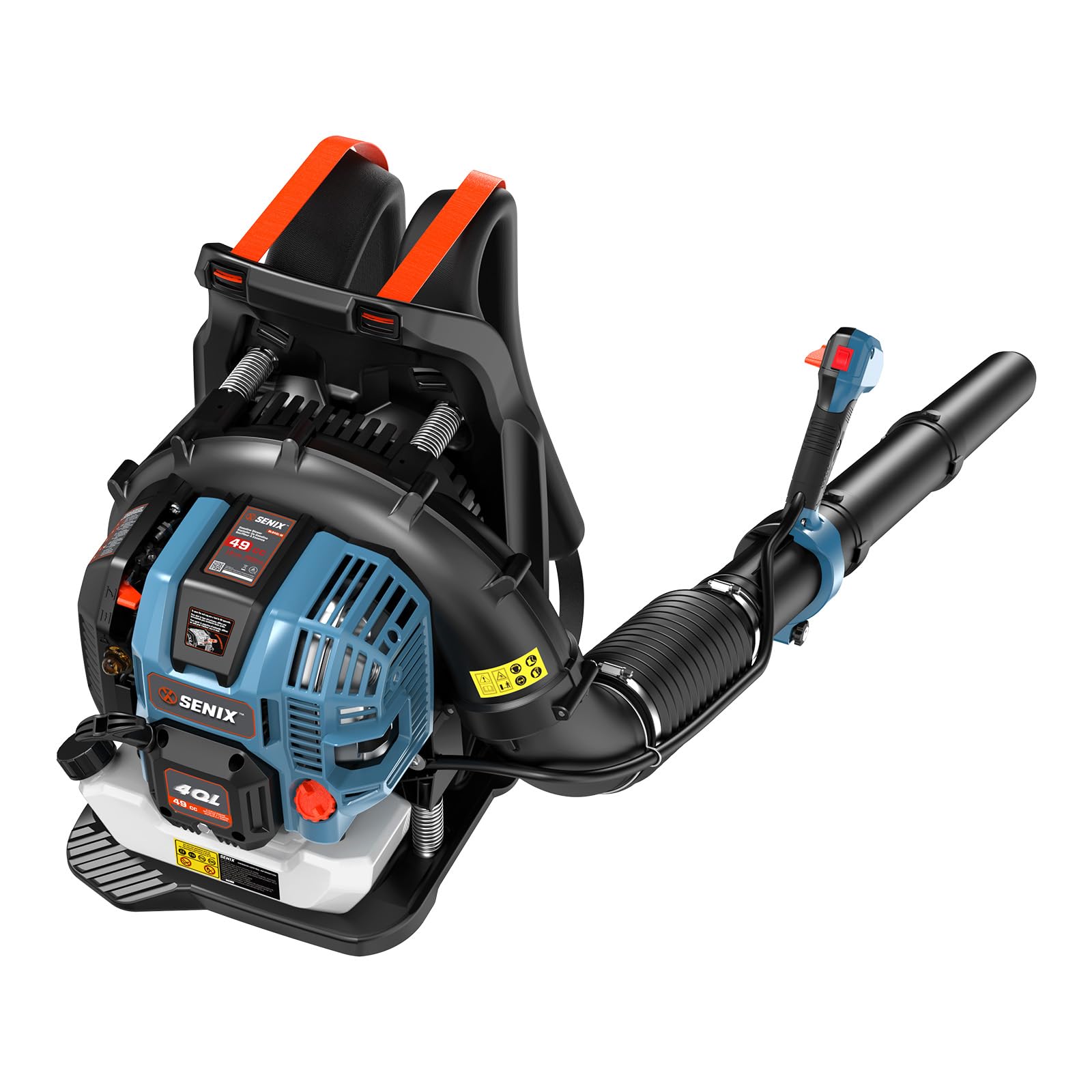
This blower works well for regular yard cleanup, but it has a few drawbacks that keep it from being the best choice for everyone.
Pros
- Strong airflow clears leaves and debris quickly
- Comfortable straps reduce strain during longer use
- No need to mix fuel and oil
Cons
- Plastic frame feels less sturdy than expected
- Engine performance can be inconsistent
- Straps may loosen during use
We noticed right away that the SENIX backpack blower has plenty of power for everyday jobs. It handled wet leaves and small branches without much effort, and the throttle control made it easy to adjust the speed. The lack of fuel mixing also saved us time when getting started.
Comfort is another strong point. The padded straps sit well on the shoulders, and the weight feels balanced once it’s on our back. After using it for a while, we didn’t feel as sore as we have with other blowers. That said, the frame material doesn’t inspire much confidence if dropped or handled roughly.
Where this blower falls short is in consistency. While it starts easily, the engine sometimes hesitates or runs unevenly after extended use. The straps also slipped loose a few times, which forced us to stop and readjust. For light to medium yard work it performs fine, but for heavy-duty use we might look at sturdier options.
Milkiwai 63CC Gas Backpack Leaf Blower
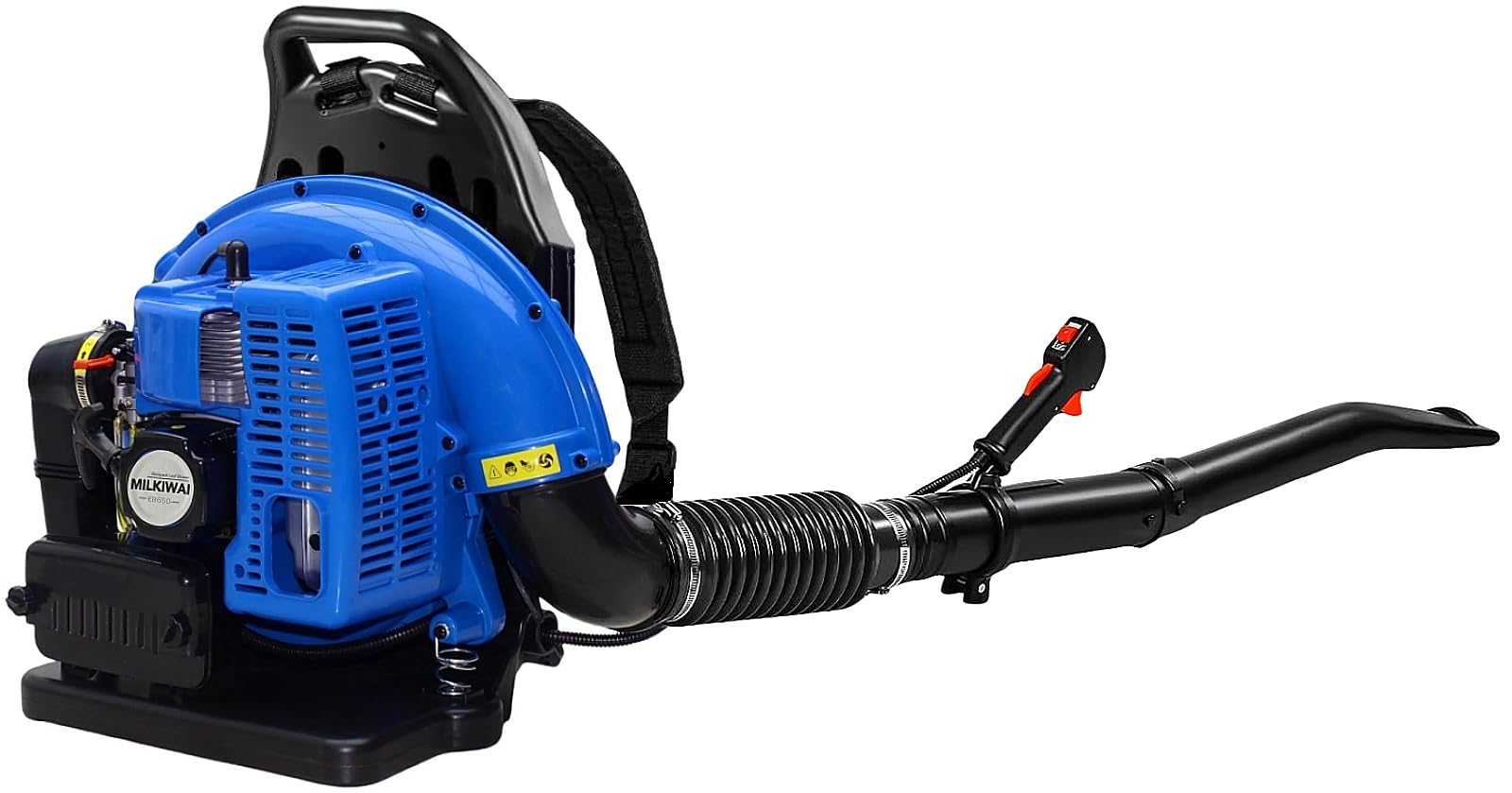
This blower is a solid choice for anyone who needs strong power and longer run time for yard cleanup.
Pros
Want to Grow Fresh Food at Home?
Grab the Beginner’s Guide to Thriving Gardens—your step-by-step plan to grow real food in any backyard, patio, or balcony. Perfect for first-time gardeners!
Buy the Ebook for $14Includes 7 free bonus guides • Instant download • Beginner-friendly
- Moves heavy, wet leaves with ease
- Comfortable harness makes longer jobs manageable
- Runs as long as we keep fuel in the tank
Cons
- A bit bulky to store in smaller sheds
- Takes a few pulls to start when cold
- Louder than some battery-powered models
We noticed right away how much force this blower delivers. Wet piles that usually take a rake moved quickly, and the wide nozzle cleared open areas in less time than expected. Having the option to switch to a narrower tip also helped when working around corners and tight spots.
The backpack straps felt padded and supportive, which made a difference during longer use. At about 19 pounds, it’s not the lightest tool, but the balance and spring system kept strain low. We could keep going without needing constant breaks.
Refueling was simple, and we liked not worrying about batteries running out mid-job. The noise level is higher than an electric blower, so ear protection is smart. Still, for larger yards or heavier cleanup, this gas model gave us reliable performance with fewer interruptions.
HASANEN Backpack Leaf Blower

This blower is a solid choice for those of us who want strong power and decent comfort without paying top dollar.
Pros
- Strong air output clears leaves, gravel, and light snow quickly
- Comfortable straps and back padding make longer use manageable
- Large fuel tank reduces the need for frequent refills
Cons
- Can burn through fuel faster than expected
- Some parts feel less durable and may loosen over time
- Noise level is high, so ear protection is a must
We found the HASANEN Backpack Leaf Blower to be plenty capable for yard cleanup. The engine starts with only a couple pulls, and once it’s running, it pushes out enough force to move even damp leaves. The adjustable nozzle makes it easy to change direction without stopping.
Carrying it on our backs felt more comfortable than expected. The straps adjust well, and the padded backrest keeps the heat from the engine away from us. After about 30 minutes, we did notice the weight, but it was still easier than handling a handheld blower for the same amount of time.
On the downside, it drinks fuel quickly if we run it at full throttle. We also noticed that some of the plastic fittings could be sturdier, and we had to tighten them after a few uses. The noise is also quite loud, so ear protection isn’t optional. Overall, it’s a practical option for regular yard work if we don’t mind the fuel use and upkeep.
Buying Guide
When we choose a gas backpack leaf blower, we need to focus on power, comfort, and ease of use. Each feature affects how well the tool performs and how long we can use it without strain.
Engine size plays a big role in performance. Larger engines usually provide more blowing force, but they can also be heavier and louder. We should balance power with comfort based on the size of the area we maintain.
Weight and harness design matter for long use. A padded, adjustable harness helps spread weight across our shoulders and back. This makes the blower more comfortable to carry for extended periods.
Noise level is another factor. Gas models are often louder than electric ones, so we may want to check the decibel rating. Using hearing protection is also a good idea.
Fuel efficiency and tank size affect how often we stop to refuel. A larger tank means fewer breaks, but it also adds weight. We should consider how much run time we need before refilling.
| Feature | What to Look For | Why It Matters |
|---|---|---|
| Engine Size | Medium to large, depending on yard size | Balances power with handling |
| Weight | Lighter with padded straps | Reduces fatigue during long use |
| Noise Level | Lower decibel rating if possible | Makes operation more comfortable |
| Fuel Tank | Moderate size for balance | Longer run time without excess weight |
| Harness Fit | Adjustable and padded | Improves comfort and support |
Frequently Asked Questions
We should think about performance, upkeep, and impact when using a gas backpack leaf blower. Power, noise, and technique all play a role in how effective and practical these tools are for yard work.
What factors should be considered when choosing a gas backpack leaf blower?
We need to look at engine size, weight, and fuel efficiency. Airflow speed and volume matter because they affect how quickly we can move leaves. Comfort features like padded straps and adjustable handles also make a difference during long use.
How do I properly maintain my gas backpack leaf blower for optimal performance?
We should check and clean the air filter often. It’s important to replace spark plugs and fuel filters on schedule. Keeping the fuel fresh and cleaning debris from the cooling fins helps the engine run smoothly.
What are the environmental impacts of using gas backpack leaf blowers?
Gas engines release emissions that contribute to air pollution. They also use non-renewable fuel. Noise pollution from these machines can disturb neighbors and wildlife.
How does the power of a gas backpack leaf blower compare to electric models?
Gas models usually provide higher airspeed and volume, which makes them better for large yards or heavy debris. Electric models are less powerful but lighter and easier to start. We often choose gas when we need longer run time and stronger performance.
What are the noise levels associated with operating a gas backpack leaf blower?
Gas backpack blowers can reach noise levels between 70 and 100 decibels. This is louder than most electric models. We should use hearing protection and follow local noise regulations when operating them.
Can you recommend some techniques for effective leaf blowing with a gas backpack model?
We should work in one direction and move leaves into piles instead of scattering them. Holding the nozzle at a shallow angle helps push leaves across the ground more efficiently. For best results, we can use short bursts of air rather than holding the throttle fully open at all times.
Want to Grow Fresh Food at Home?
Grab the Beginner’s Guide to Thriving Gardens—your step-by-step plan to grow real food in any backyard, patio, or balcony. Perfect for first-time gardeners!
Buy the Ebook for $14Includes 7 free bonus guides • Instant download • Beginner-friendly