Best Container Hydroponic Systems for Efficient Indoor Gardening
This post may contain affiliate links. If you purchase through them, I may earn a small commission at no extra cost to you. As an Amazon Associate, I earn from qualifying purchases.
Hydroponic gardening lets us grow plants without soil by using nutrient-rich water. This method saves space, reduces mess, and can produce faster growth than traditional gardening. Container hydroponic systems make it even easier by combining all the parts needed—like the reservoir, pump, and growing tray—into one compact unit. They’re ideal for people who want fresh herbs or vegetables at home without a large setup.
5 Quick-Start Garden Plans for Growing Fresh Food at Home (Free PDF)
Get beginner-friendly raised bed garden layout plans, simple container garden ideas, and a flexible salad garden plan you can put to work right away. Perfect for small spaces, patios, and first-season growers.
Instant email delivery • Unsubscribe anytime
Choosing the right container hydroponic system depends on a few key factors. Size matters because it affects how many plants you can grow and where the system fits in your space. Material quality influences durability and how well the system holds water and nutrients. Ease of setup and maintenance also play a big role, especially for beginners. The best container hydroponic systems balance capacity, reliability, and simplicity to make indoor growing efficient and low effort.
We spent hours comparing different models and testing their performance to find the systems that make hydroponic gardening simple and productive.
Want to Grow Fresh Food at Home?
Grab the Beginner’s Guide to Thriving Gardens—your step-by-step plan to grow real food in any backyard, patio, or balcony. Perfect for first-time gardeners!
Buy the Ebook for $14Includes 7 free bonus guides • Instant download • Beginner-friendly
Best Container Hydroponic Systems
We researched and compared top container hydroponic systems to find the most reliable and easy-to-use options. Below is our list of the best systems that help us grow healthy plants indoors with less mess and effort.
Aunifun Hydroponics Grower Kit

A solid starter kit for anyone wanting to try container hydroponics without spending much.
Pros
- Compact setup fits easily on a counter or balcony
- Includes all the main parts needed to start growing
- Dark container helps prevent algae growth
Cons
- Air pump can be noisy during use
- Limited space for only six plants
- Power plug supports only 110–120V outlets
We found the Aunifun kit simple to assemble and ideal for quick indoor setups. The included air pump and stone create good oxygen flow, and the buoy makes it easy to monitor water levels. It’s a straightforward system that works well for lettuce, herbs, and other small greens.
The gray PVC-U container feels sturdy and resists light, which keeps algae from forming. We liked that everything needed to start—baskets, sponges, pump, and tubing—comes in one box. It’s a practical choice for beginners who want to learn the basics of hydroponic growing.
While the system performs well, the pump can vibrate loudly if not placed on a steady surface. It also requires a 110–120V outlet, so users outside those regions will need an adapter. Overall, this kit offers good value and is a reliable entry point into small-scale hydroponics.
NATGAI Hydroponic Grow Kit

This compact hydroponic system works well for beginners who want to grow herbs or small vegetables indoors without much setup effort.
Pros
Want to Grow Fresh Food at Home?
Grab the Beginner’s Guide to Thriving Gardens—your step-by-step plan to grow real food in any backyard, patio, or balcony. Perfect for first-time gardeners!
Buy the Ebook for $14Includes 7 free bonus guides • Instant download • Beginner-friendly
- Simple to assemble and easy to use
- Grows plants faster than soil setups
- Lightweight and fits well on shelves or countertops
Cons
- Air pump runs louder than expected
- Foam inserts may need adjusting for better root growth
- Limited space for larger plants
We found the NATGAI Hydroponic Grow Kit straightforward to set up, even without prior hydroponic experience. The included air pump keeps water moving, which helps plants stay healthy. Its small footprint makes it ideal for apartments or classrooms.
During use, lettuce and herbs grew noticeably faster than in soil. The white PVC container felt sturdy and easy to clean. We appreciated that the holes on top prevented leaks, a common issue with other systems.
However, the pump vibrated enough to move slightly on the counter, so we secured it with tape. The foam sponges also held too much water at first, slowing root growth until we trimmed them thinner. Despite these small issues, this kit offers solid value for anyone starting hydroponic gardening.
Owltron Smart Hydroponics Kit
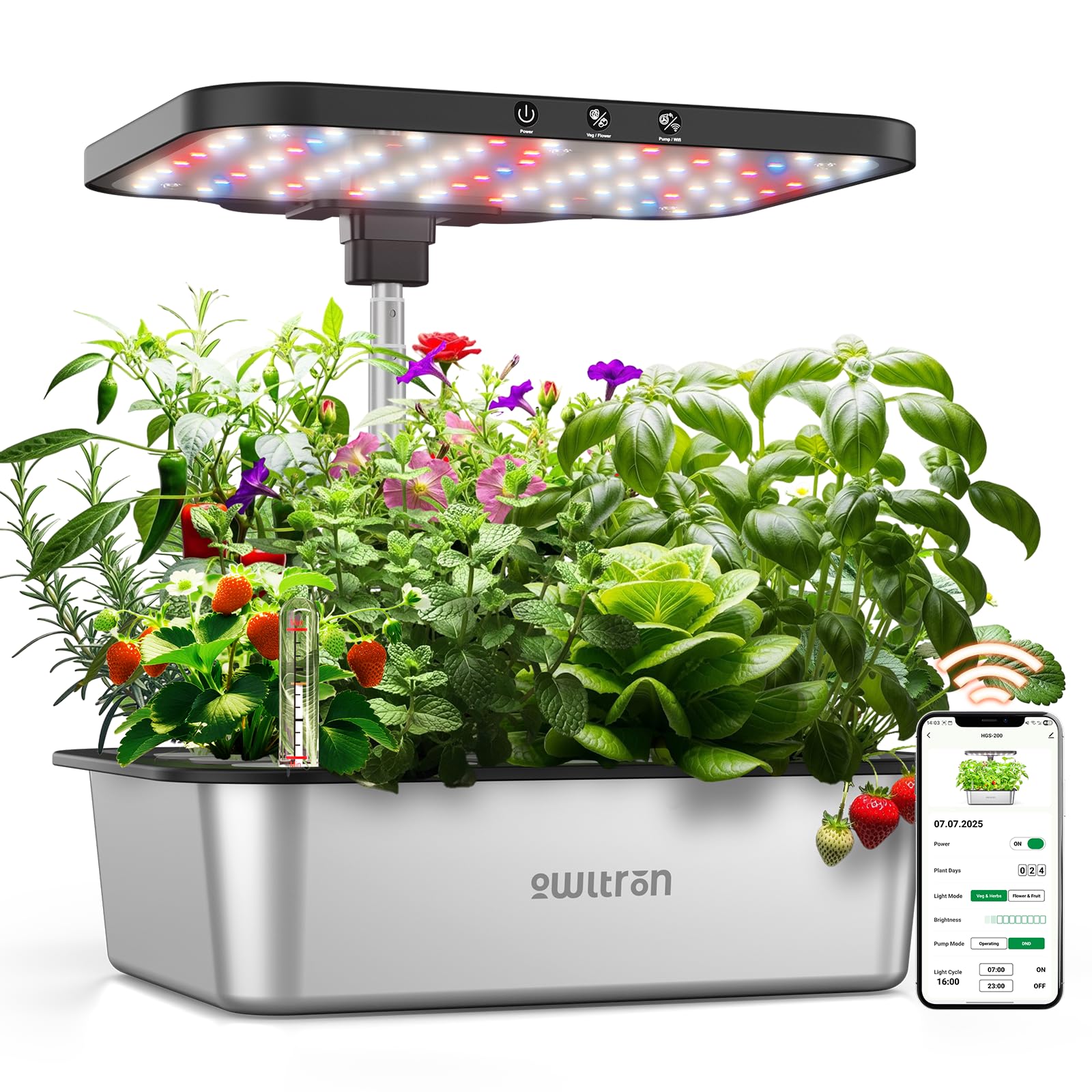
This system suits anyone who wants a quiet, low-maintenance way to grow herbs and vegetables indoors year-round.
Pros
- Simple setup with helpful app control
- Strong LED light encourages steady growth
- Sturdy stainless steel build looks neat on the counter
Cons
- Seeds not included
- App setup takes a few minutes to learn
- Tank needs refilling every few days for larger plants
We found the Owltron Smart Hydroponics Kit easy to assemble and start using right away. The 15 pods gave us plenty of room to try different herbs. The LED light was bright but not harsh, and we liked that it adjusted automatically through the app.
During testing, our basil and lettuce grew quickly and looked healthy. The water pump stayed quiet, which made it easy to keep the unit in our kitchen. The stainless steel finish felt durable and was simple to wipe clean after each use.
We appreciated the adjustable height feature as our plants got taller. The app’s timer and light settings worked well once we got used to them. For anyone who wants a compact, reliable hydroponic system that looks good and performs well, this kit is a solid choice.
MAOPINER Indoor Hydroponic Grow Kit

This compact hydroponic kit works well for anyone who wants to start small and grow herbs or greens indoors without much fuss.
Pros
- Simple to set up and operate
- Grows plants faster than soil methods
- Works both indoors and outdoors
Cons
Want to Grow Fresh Food at Home?
Grab the Beginner’s Guide to Thriving Gardens—your step-by-step plan to grow real food in any backyard, patio, or balcony. Perfect for first-time gardeners!
Buy the Ebook for $14Includes 7 free bonus guides • Instant download • Beginner-friendly
- Pump noise can be noticeable in quiet rooms
- White sponges may develop algae
- No built‑in grow light included
We found the MAOPINER kit easy to assemble. The instructions were clear, and all the parts fit together snugly. The included air pump and bubble stone kept the water oxygenated, which helped our seedlings take off quickly.
Plants grew steadily, and we noticed faster root development compared to soil pots. The compact design made it easy to place on a counter or balcony. We liked that it didn’t need much maintenance once set up.
However, the white sponges tended to collect algae after a few weeks, so we switched to rockwool cubes. The pump’s hum was audible at night, though it wasn’t too disruptive. Overall, this system suits beginners who want a budget‑friendly way to try hydroponics at home.
LetPot LPH-SE Hydroponic Garden Kit

This system suits anyone who wants a simple, app-controlled way to grow herbs and vegetables indoors without dealing with soil.
Pros
- Easy to manage through the LetPot app
- Adjustable LED lighting supports steady growth
- Durable build and clean design
Cons
- App setup can take a few tries
- Water tube may kink during installation
- Doesn’t include seeds
We found the LetPot LPH-SE Hydroponic Garden Kit easy to set up and use. The app connection worked smoothly after a short learning curve, and we liked being able to adjust the light schedule from our phones. The LED panel gave off a balanced brightness that helped our herbs grow evenly.
The stainless steel surface looked modern and wiped clean without effort. We also appreciated the tall, adjustable light rod, which handled plants at different stages without crowding. The 5.5-liter tank held enough water to last several weeks, saving us from constant refilling.
While the system came ready with sponges, baskets, and nutrients, we had to supply our own seeds. That wasn’t a big issue, but it’s worth noting for first-time users. Overall, this hydroponic kit offers reliable performance and a polished design that fits well in any kitchen or small indoor space.
Buying Guide
When we choose a container hydroponic system, we focus on size, material, and plant capacity. The right system should fit our available space and support the number of plants we plan to grow.
We also look at water and nutrient management. Systems with easy-to-clean reservoirs and adjustable flow controls help maintain stable conditions. Consistent water circulation prevents root rot and nutrient buildup.
Power use and maintenance matter too. Simpler designs often need less upkeep, while automated systems can save time but may cost more. We should balance convenience with reliability.
| Feature | Why It Matters | What To Look For |
|---|---|---|
| Container Size | Affects plant growth and space use | Choose based on available area and plant type |
| Material Quality | Impacts durability and insulation | Look for sturdy, non-toxic plastics or metals |
| Water System | Ensures nutrient delivery | Check for pumps with adjustable flow |
| Lighting Compatibility | Supports healthy growth | Make sure the system fits common grow lights |
| Ease of Cleaning | Reduces algae and buildup | Prefer removable parts and smooth surfaces |
Before buying, we should also consider budget and expandability. Some systems allow adding more containers later, which helps if we plan to grow more plants in the future.
Frequently Asked Questions
We focus on helping growers choose reliable hydroponic systems, select proper container sizes, and identify plants that perform best in water-based setups. We also highlight complete kits that simplify setup and maintenance for home use.
What are the top-rated hydroponic systems for beginners?
We recommend simple systems like Deep Water Culture (DWC) and Kratky setups for new growers. These systems require minimal parts, are easy to maintain, and support common herbs and leafy greens.
Which hydroponic systems are best suited for indoor gardening?
For indoor spaces, NFT (Nutrient Film Technique) and Ebb and Flow systems work well. They fit compact areas and allow consistent nutrient delivery with controlled lighting and airflow.
How do I choose the right size container for my hydroponic setup?
We base container size on plant type and root growth. Small herbs need shallow containers, while larger plants like tomatoes require deeper reservoirs to support root expansion and nutrient circulation.
What are the essential features to look for in a hydroponic system kit?
A good kit includes a pump, nutrient reservoir, growing medium, and pH testing tools. We look for durable materials, adjustable flow controls, and clear instructions for assembly and maintenance.
Can you recommend a complete hydroponic grow system for home use?
We find AeroGarden and Hydrofarm systems offer reliable all-in-one solutions. They come with lighting, nutrient packs, and timers that make them suitable for small kitchens or indoor garden setups.
Are there any plants that typically don’t thrive in hydroponic environments?
We avoid growing root-heavy plants like carrots, potatoes, and onions in hydroponics. These crops need dense soil structure, which water-based systems cannot provide effectively.
Want to Grow Fresh Food at Home?
Grab the Beginner’s Guide to Thriving Gardens—your step-by-step plan to grow real food in any backyard, patio, or balcony. Perfect for first-time gardeners!
Buy the Ebook for $14Includes 7 free bonus guides • Instant download • Beginner-friendly
